

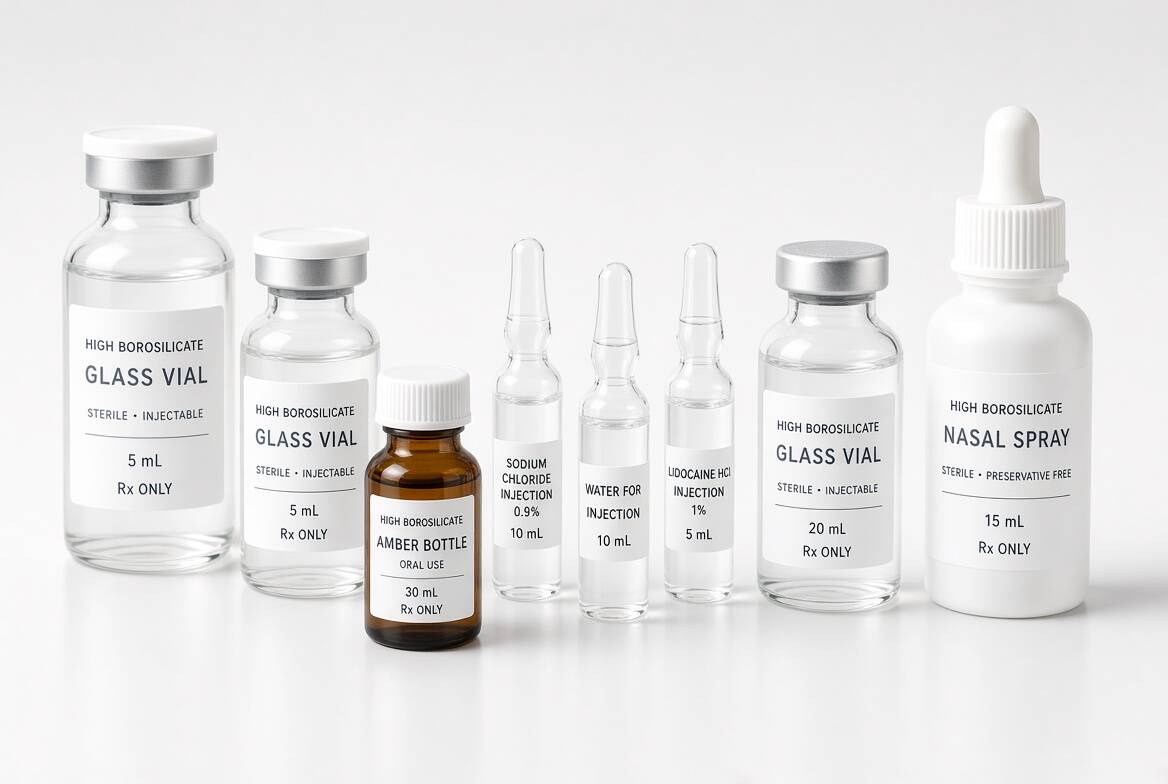
Is Borosilicate Glass Toxic?
In our previous article, we covered the manufacturing process and characteristics of borosilicate glass. In this piece, we will address a common question: Is borosilicate glass toxic, and for what types of products is it suitable?
When manufactured in compliance with relevant safety standards, high-quality borosilicate glass is generally considered safe for use in food-contact applications and laboratory settings.
Rather than worrying about the material itself, the focus should be on the final product, its manufacturing quality, and the availability of relevant test reports or compliance documentation.
If a container is intended for food, beverages, cosmetics, or pharmaceutical products, always verify the specific requirements for that intended use—never assume that all glass products share the same performance characteristics.
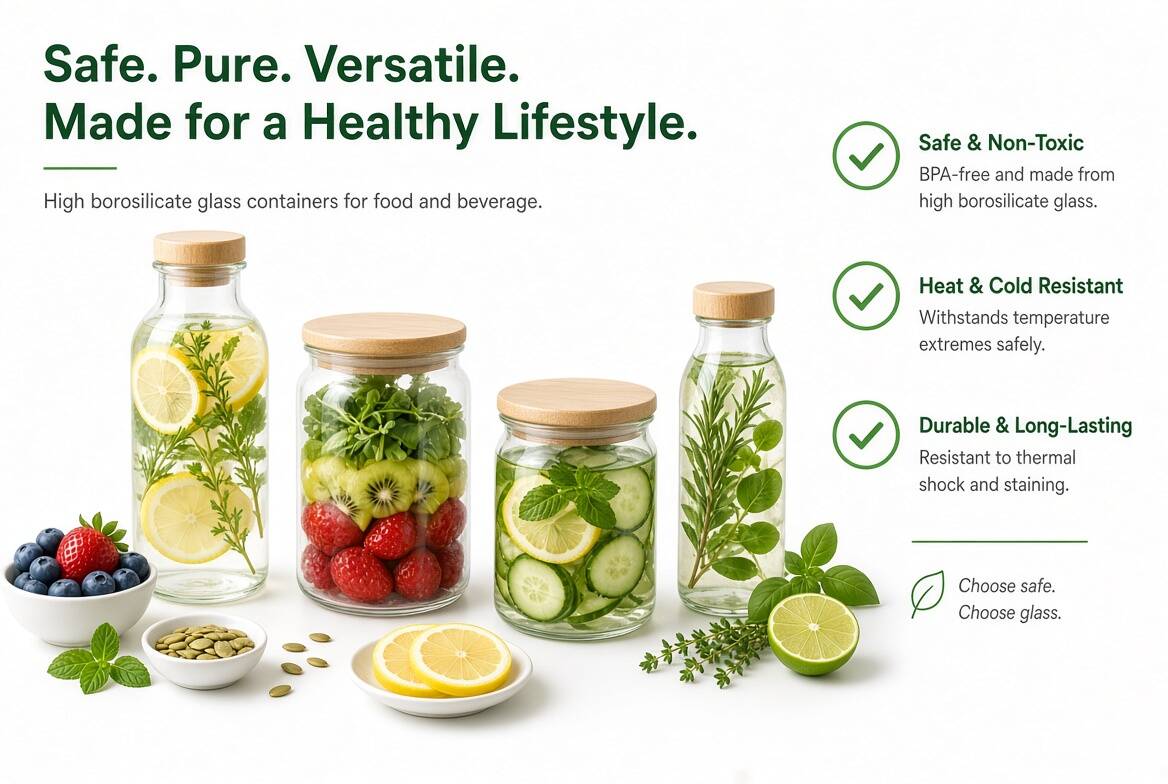
Applications of Borosilicate Glass
Thanks to its superior thermal and chemical properties, borosilicate glass is widely used across various industries. Its suitability for specific applications depends on the grade of the glass, the product design, and the required performance.
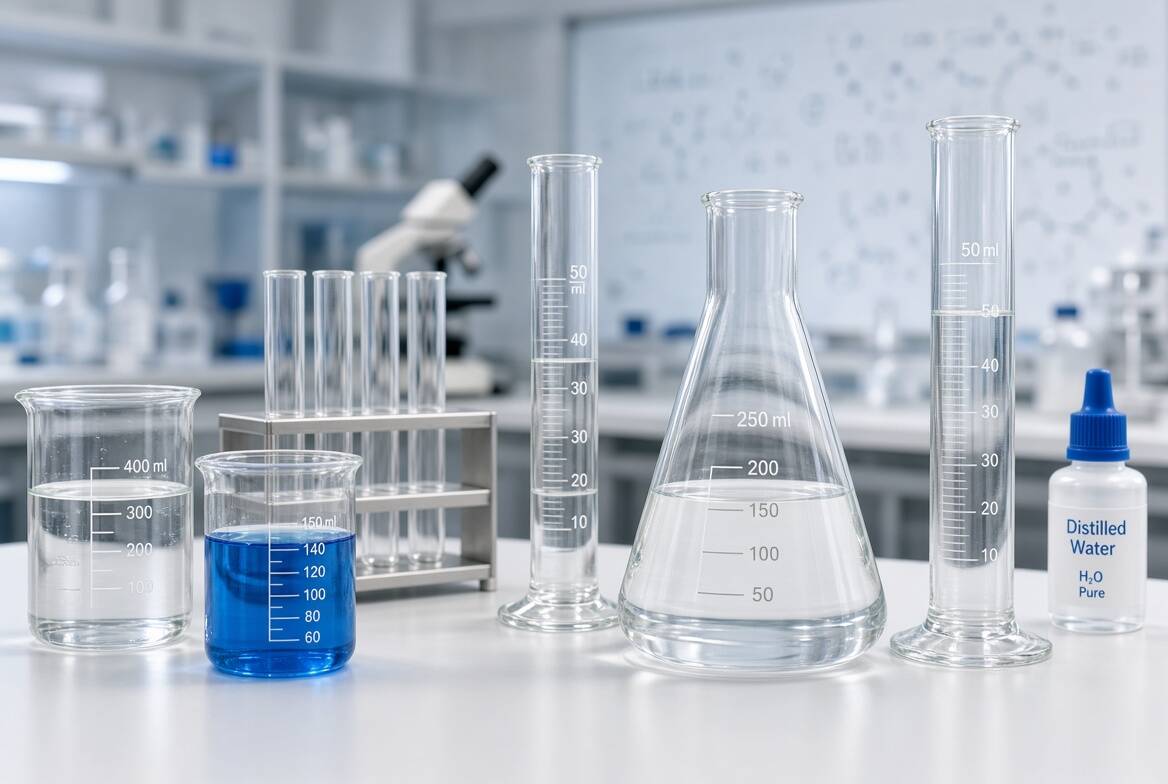
Laboratory Glassware
Common laboratory equipment—such as beakers, flasks, and test tubes—is frequently made from borosilicate glass. These items are often exposed to chemical substances or subjected to temperature fluctuations during experiments or cleaning processes.
The material’s exceptional chemical stability and resistance to thermal shock make it ideal for such environments. Naturally, the specific grade of glass chosen must be compatible with the chemicals, temperature conditions, and operational procedures involved.
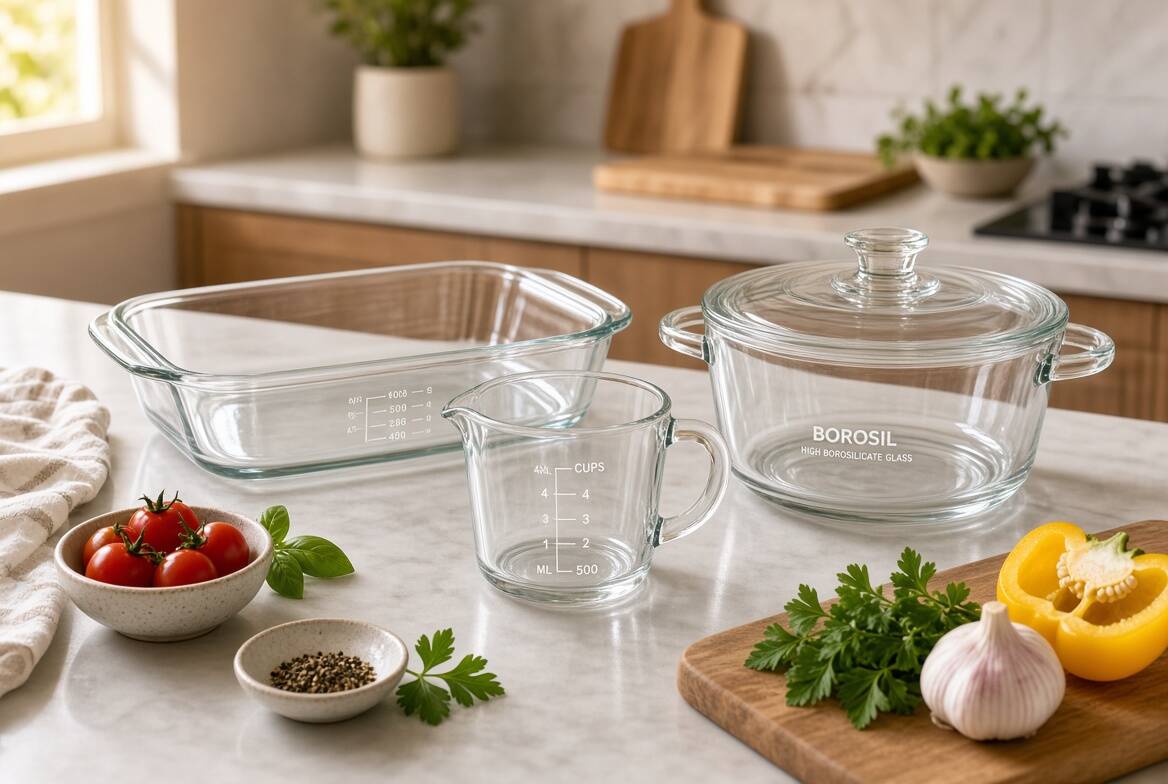
Cookware and Kitchenware
Borosilicate glass is also used for items like baking dishes, measuring cups, and other kitchenware that must withstand high temperatures.
Its low coefficient of thermal expansion helps reduce the risk of breakage caused by thermal shock (rapid heating or cooling). Nevertheless, users should always follow the manufacturer’s instructions. It is important to remember that drastic temperature changes, uneven heating, or pre-existing damage to the glass can all lead to breakage.
Pharmaceutical and Specialized Containers
Due to its excellent chemical stability and ability to withstand demanding storage or processing conditions, borosilicate glass is also used to manufacture certain pharmaceutical and specialized containers.
The specific type of glass selected depends on the contents, the production process, and the relevant industry standards. Not all medicine bottles or food containers require the use of borosilicate glass.
Food and Beverage Packaging
In applications where high heat resistance or chemical stability is required, borosilicate glass may be considered as a packaging material for food or beverages.
However, for many common beverage bottles, wine bottles, and similar containers, soda-lime glass (standard glass) remains an economical and practical choice. It offers a wide variety of shapes, capacities, colors, and decorative options, all while keeping material costs within a reasonable range.
When developing new packaging, it is essential to first define the filling temperature, storage conditions, sealing requirements, and projected production volume before deciding which type of glass material to use. Our bottle design team can help you evaluate these factors during the planning stage, and every production run is verified through our quality inspection process.
Conclusion
High-quality borosilicate glass is not toxic when produced in accordance with applicable safety standards. The real considerations are product quality, compliance documentation, and selecting the right glass grade for your specific application. Whether you need lab-grade chemical resistance, oven-safe cookware, or cost-effective beverage packaging, the key is matching material properties to real-world conditions.
Need help specifying the right glass for your next project? Visit our custom design page or contact us to discuss your requirements.
[…] Next Article → Is High-Borosilicate Glass Toxic? Table of Contents∧ […]
[…] ← Previous Article Is High-Borosilicate Glass Toxic? Next Article → How to Choose the Right Glass for Your Project Table of Contents∧ […]