

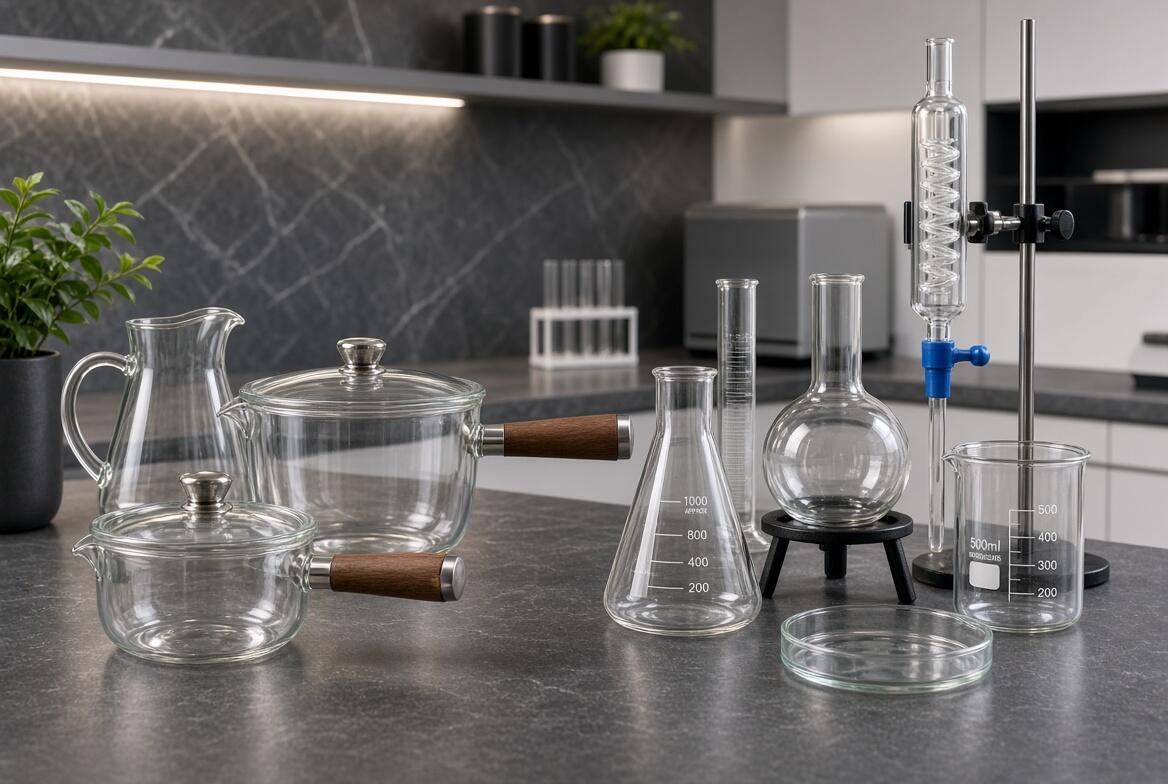
What Is Borosilicate Glass?
Borosilicate glass is primarily composed of silica and boron trioxide. The addition of boron alters how the glass responds to temperature fluctuations, resulting in a lower coefficient of thermal expansion compared to standard soda-lime glass.
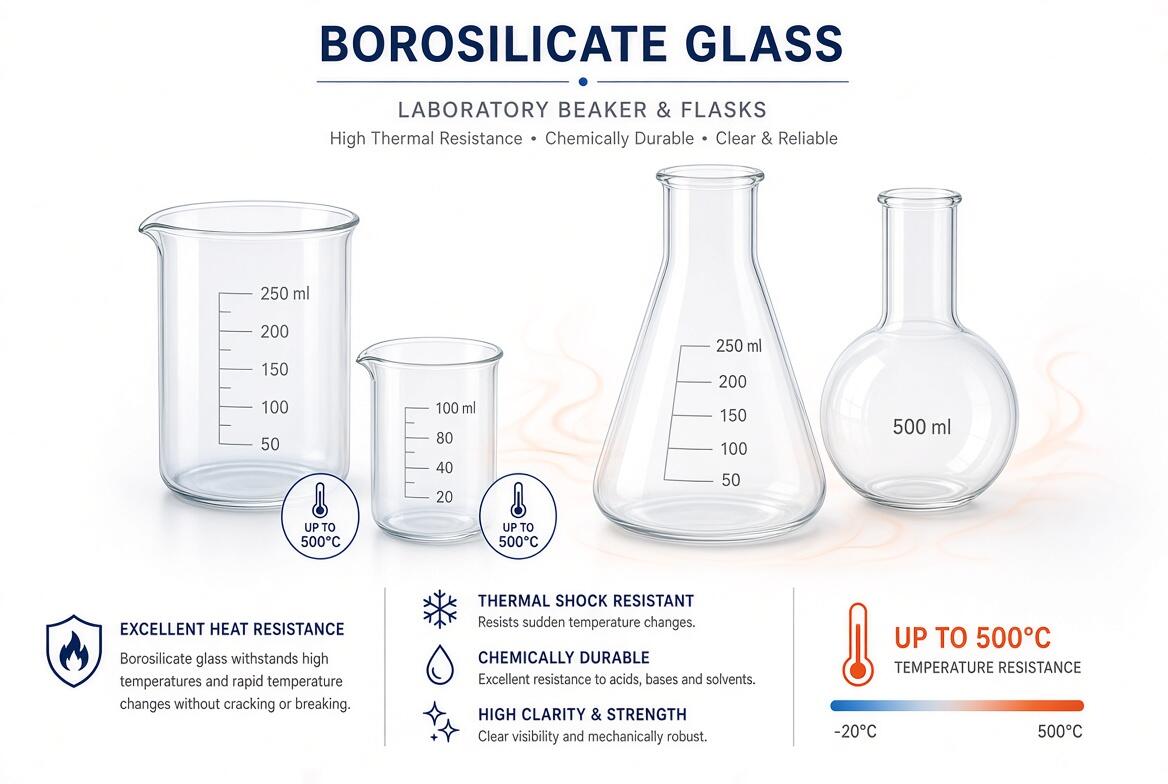
In simpler terms, borosilicate glass expands and contracts less when heated or cooled. This provides superior thermal shock resistance—a critical property when different parts of a glass object experience rapid temperature changes.
Another key characteristic is its chemical stability. Borosilicate glass is highly resistant to a wide range of chemical substances, making it the material of choice for laboratory equipment. If you are weighing different material options, our material selection guide breaks down the trade-offs.
How Does Borosilicate Glass Differ from Standard Glass?
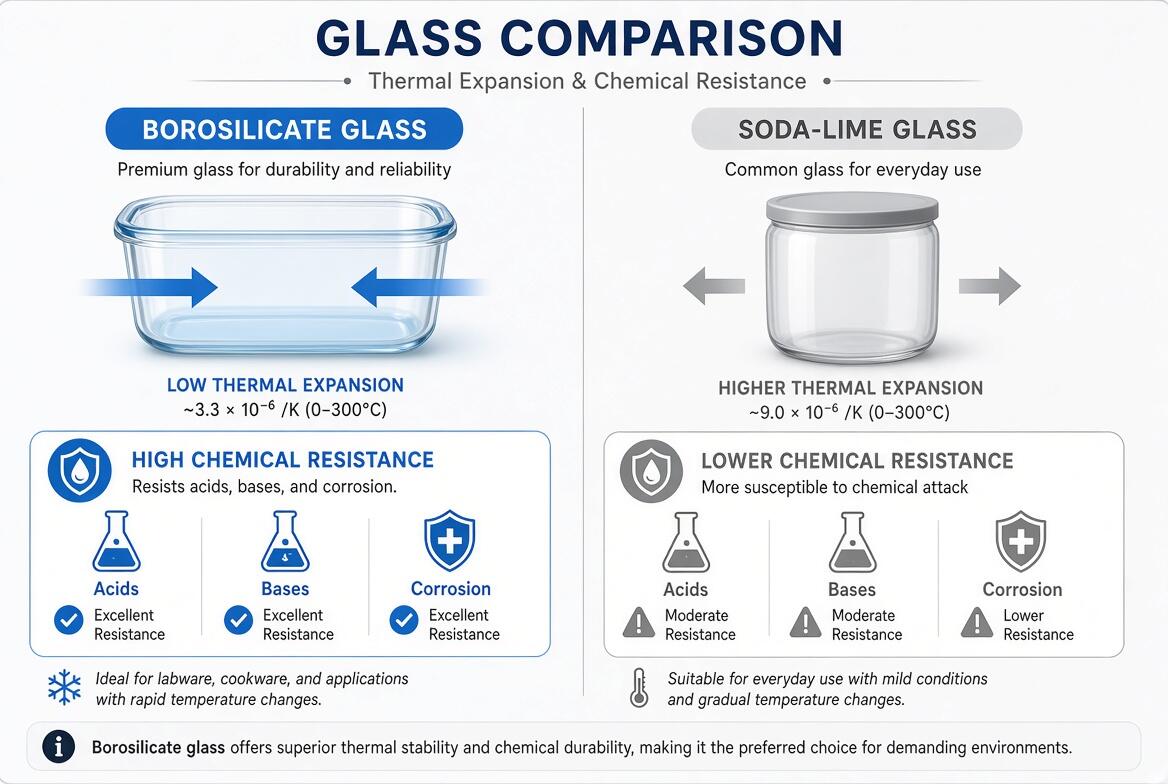
Most common beverage bottles are made from soda-lime glass. Borosilicate glass has a different composition and generally performs better when subjected to rapid temperature changes.
- Thermal Expansion: Expands less, enhancing thermal shock resistance.
- Chemical Durability: Excels in chemical corrosion resistance.
- Cost: Can be more expensive than conventional soda-lime glass.
For those sourcing packaging, evaluate whether these specific properties are necessary. Our team supports the full bottle design and production process.
How Is Borosilicate Glass Manufactured?
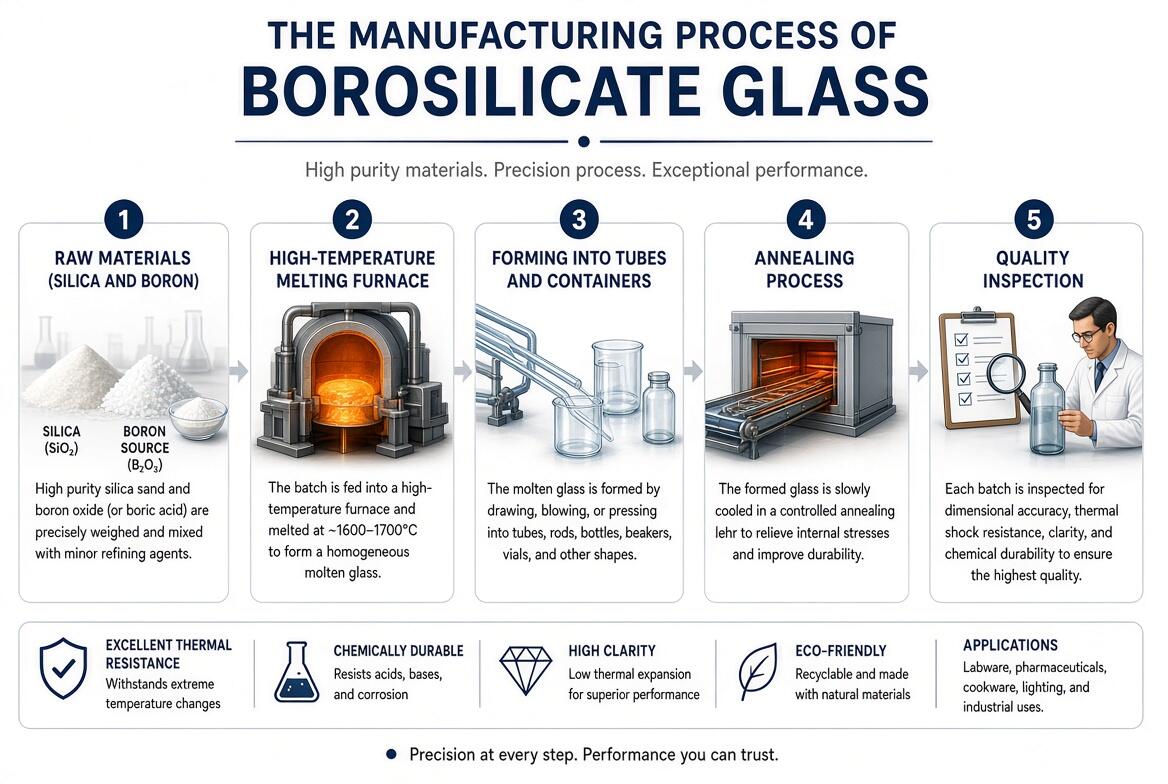
The manufacturing process begins with raw materials mixed and melted at high temperatures.
Borosilicate Glass vs. Tempered Glass
Tempered glass is heat-treated for impact strength; borosilicate is engineered for thermal and chemical performance.
Applications of Borosilicate Glass
Laboratory Glassware
Beakers and flasks rely on borosilicate for heat and chemical resistance. Our laboratory glassware range covers standard forms.
Kitchen & Cookware
Oven-to-table bakeware benefits from thermal stability. Browse our food jars.
Optical & Lighting
Clarity and thermal stability suit optical instruments.
Choosing the Right Glass for Your Project
If heat/chemical resistance is key, borosilicate is the answer. For impact safety, tempered glass. For everyday bottles, soda-lime glass offers the best cost-performance balance.
Conclusion
Borosilicate glass is the specialist’s choice for heat and chemicals; tempered glass for impact safety. Need a custom shape? Visit our custom design page, or contact us.