

For decades, the rum aisle looked like an audition for an 18th-century pirate movie. Cheap amber glass, distressed faux-parchment labels, crooked neck wraps, and fake wax drippings that flaked off in your drink.
If you were bottling a high-proof mixer intended for sugary colas on spring break, that rustic look was fine. But craft distillers today are putting out 12-year solera rums, single-cask Jamaican pot-still expressions, and Martinique rums that easily rival \$120 single malt scotches. And pouring a \$90 sipping spirit out of a generic 400-gram utility bottle is like serving dry-aged ribeye on a disposable paper plate.
1. The Death of Pirate Clichés: Why Rum Packaging Went Ultra-Flint
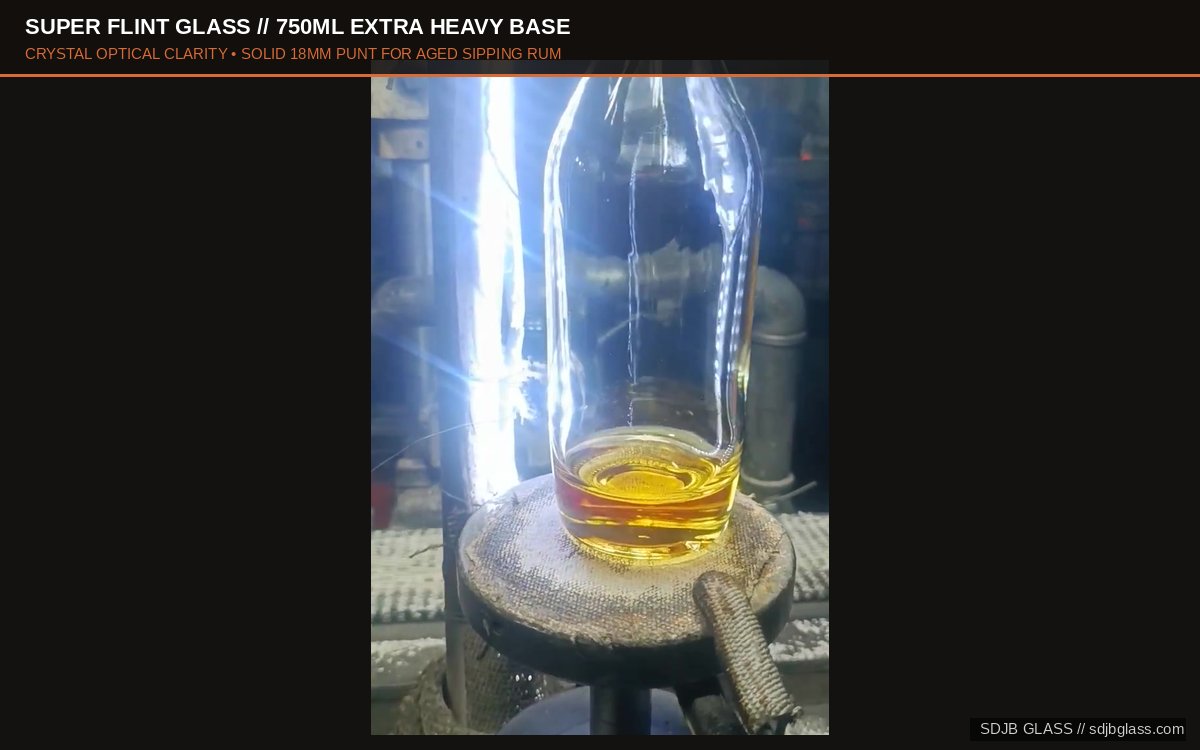
Aged rum has one of the most visually captivating color spectrums in the entire distilled spirits world—ranging from pale straw and spun gold to deep mahogany and ruby copper. Hiding that liquid behind cheap, greenish-tinted utility glass is a commercial tragedy.
That is why top-shelf distilleries have overwhelmingly pivoted to Super Flint Glass (Extra High-Flint). Super flint glass contains ultra-pure silica sand with near-zero iron oxide contamination (under 0.02% Fe₂O₃). The result is optical clarity that rivals crystal: no greenish edge discoloration, zero milky haze, and true refractive sparkle under bar backlights.
When sunlight hits an aged rum in super flint glass, the bottle acts like a prism. It gives consumers an immediate visual preview of cask maturation and wood extraction before they ever read the back label.
2. Weight & The “Tactile Prestige” Equation
Every packaging buyer asks us: “Does adding 200 grams of glass weight really justify the freight cost?”
Here’s the unfiltered truth from behind the retail counter: when a customer reaches for a bottle on a liquor store shelf, their subconscious evaluates quality in approximately 800 milliseconds. A lightweight 420g bottle feels fragile, hollow, and mass-produced. But when they wrap their hand around a 750g to 850g heavyweight bottle with a solid 20mm thick base, their brain immediately registers prestige and craftsmanship.
| Rum Category | Target Price Tier | Recommended Glass Type | Bottle Weight Range | Ideal Closure Style |
|---|---|---|---|---|
| White / Cocktail Rum | $15 – $25 | Standard Flint (Clear) | 420g – 500g | GPI / ROPP Aluminum Screw Cap |
| Spiced & Botanical Rum | $25 – $40 | High-Flint or Amber | 550g – 650g | Synthetic T-Top with Wood Head |
| Aged / Solera Sipping Rum | $45 – $120+ | Super Flint (Crystal Grade) | 700g – 850g+ | Heavy Beechwood or Metal Zamac T-Top |
| Overproof / Agricultural | $40 – $75 | Extra Flint or Dark Emerald | 650g – 750g | Natural Cork with Shrink Capsule |
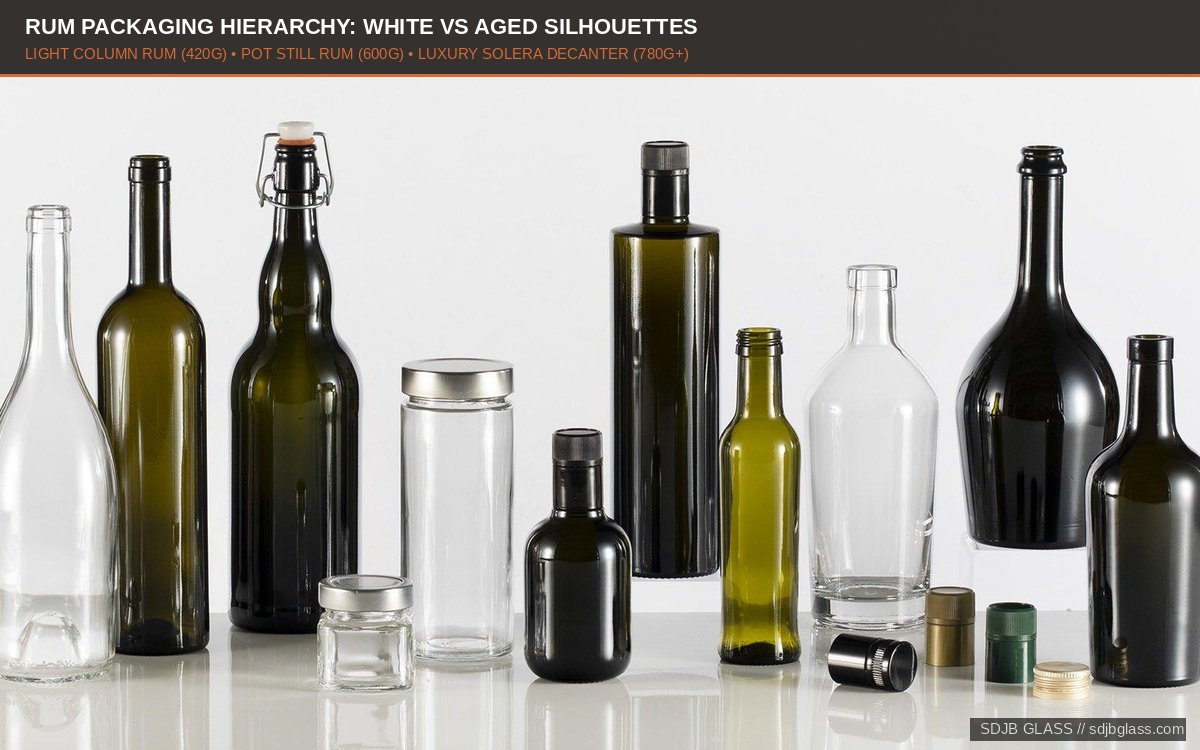
3. Engineering Traps: Shoulders, Punt Geometry, and High-Proof Evaporation
Designing a custom rum bottle isn’t just sketching a cool silhouette on an iPad. If your packaging designer doesn’t understand mold draft angles and thermal annealing, your custom production will suffer massive line rejects.
Here are the three engineering bottlenecks we fix constantly in our mold shop:
A. The 90-Degree Shoulder Trap
Many designers love flat, aggressive, 90-degree square shoulders. But in glass blow-and-blow forming, molten glass cannot flow into dead-sharp internal corners without creating thin, fragile shoulder walls. We always recommend introducing a subtle 3mm to 5mm internal radius. To the naked eye, the bottle looks completely square and modern, but the glass distributes evenly with robust impact strength.
B. High-Proof Vapor Leaks
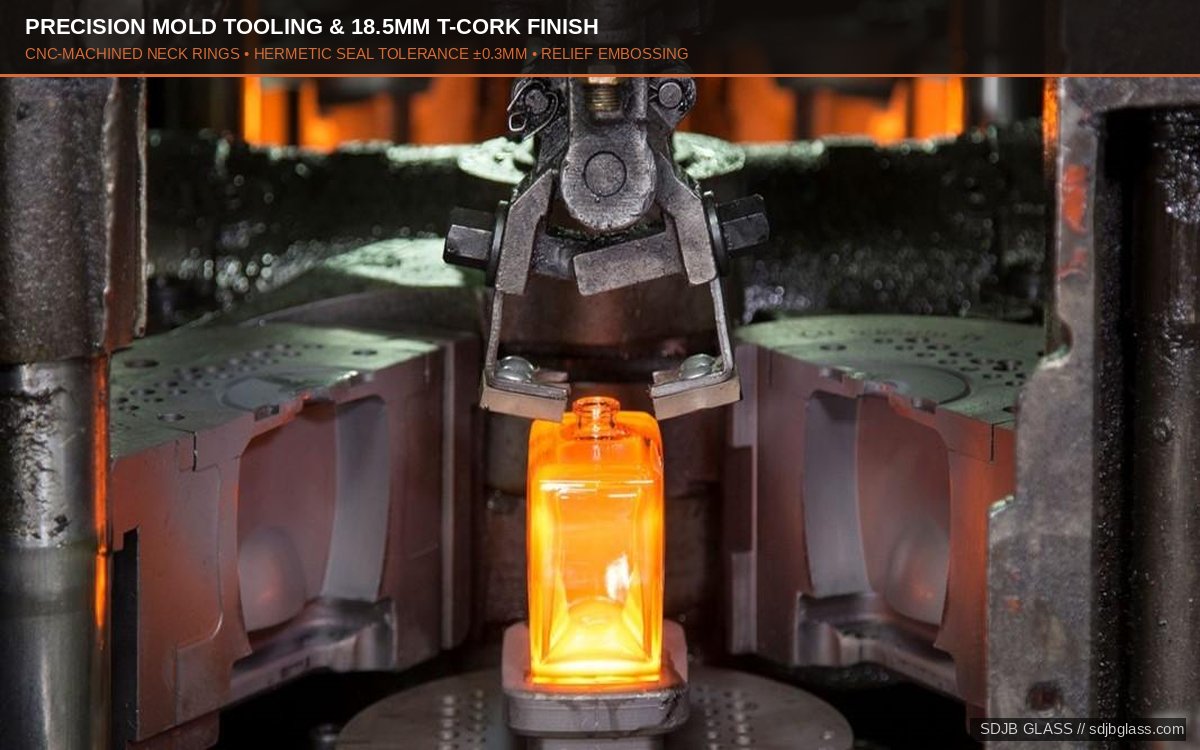
Overproof rums (54% to 75% ABV) exert serious vapor pressure against closure seals. If your bottle bore diameter tolerance fluctuates by even ±0.5mm, high-proof ethanol vapor will slowly weep past the cork during ocean container shipping. Premium rum molds require calibrated bore finishing (18.5mm ±0.25mm) matched with high-density synthetic cork shanks that resist alcohol degradation.
C. Heavy Punt Annealing Curves
A massive 25mm solid glass base looks incredible on a bar. But thick glass cools much slower than thin sidewalls. Without an extended, computer-controlled annealing lehr cycle, that temperature delta creates frozen internal stress that can cause the base to spontaneously crack months later. Quality glassmaking is 30% chemistry and 70% thermal patience.
4. Custom Embossing vs. Recessed Label Panels
How do you make a glass rum bottle instantly recognizable across a dimly lit bar? You let the glass itself become the branding.
- Debossed Base Rings: Subtle brand names, origin coordinates, or founding dates cast directly into the underside of the heavy glass punt.
- Recessed Label Windows: Sinking a 0.8mm perimeter frame into the bottle body protects paper labels from scuffing against adjacent bottles on the packaging line and during shipping.
- Tactile Raised Shoulder Crests: Sharp, crisp relief detailing (such as sugar cane motifs, family crests, or batch seals) that drinkers can physically feel when pouring.
Frequently Asked Questions About Glass Rum Bottles
Super flint glass (extra high-flint) is the gold standard for premium and aged rum bottles. It offers crystal-like transparency and zero green tint, allowing the natural golden, amber, or mahogany hues of aged rum to shine through.
Standard mass-market bottles weigh around 400g to 450g. Premium craft rum bottles typically weigh between 650g and 850g, featuring thick glass side walls and a substantial 15mm to 25mm heavy base (punt) for stability and high-end perceived value.
High-end artisanal and sipping rums almost exclusively use wooden or metal T-top cork stoppers (synthetic or natural cork shank) with an 18.5mm or 21.5mm bore finish. Screw caps (GPI/ROPP) are primarily used for high-volume mixing rums or flavored rums.
Custom embossing adds tactile brand authenticity but requires precise mold drafting (at least a 5° draft angle) and balanced wall thickness to prevent glass chill marks or fragile stress lines during blow-and-blow forming.
For fully custom mold development, standard production runs typically start at 10,000 to 20,000 units per campaign to optimize furnace changeovers, while in-stock standard bottle silhouettes with custom silk-screen printing or frosting can be sourced at lower quantities.
Ready to Upgrade Your Rum Packaging Silhouette?
Whether you need a bespoke mold with custom shoulder embossing or high-flint heavy base bottles from our stock inventory, our engineering team turns your concepts into physical samples in days.
Request A Custom Rum Bottle Quote
[…] ml) per unit. For high-value aged bourbon, single malt scotch, or artisanal rum (see our guide to custom glass rum bottle packaging), this volume difference yields dramatic production savings while preserving equivalent retail […]
[…] Development: For flagship bourbon, botanical gin, or luxury aged rum (see our dedicated guide on custom glass rum bottle packaging), custom tooling creates proprietary intellectual property. A custom mould allows you to specify […]