

Walk onto our glass plant floor on a Monday morning when the IS (Individual Section) machines are swapping mold sets from a 375ml half-pint to a 750ml standard fifth, and you will immediately see why bottle geometry is never just an aesthetic exercise. A distillery packaging engineer who views a liquor bottle purely by its marketing label will inevitably run into filling line jamming, hydrostatic thermal failure during transit, or cork leakage.
Whether you are formulating a new craft spirits line or auditing container procurement across global facilities, understanding the standard liquor bottle sizes chart requires balancing metric capacity requirements, US customary fluid ounces, brimful volume margins, and high-speed bottling line clearance.
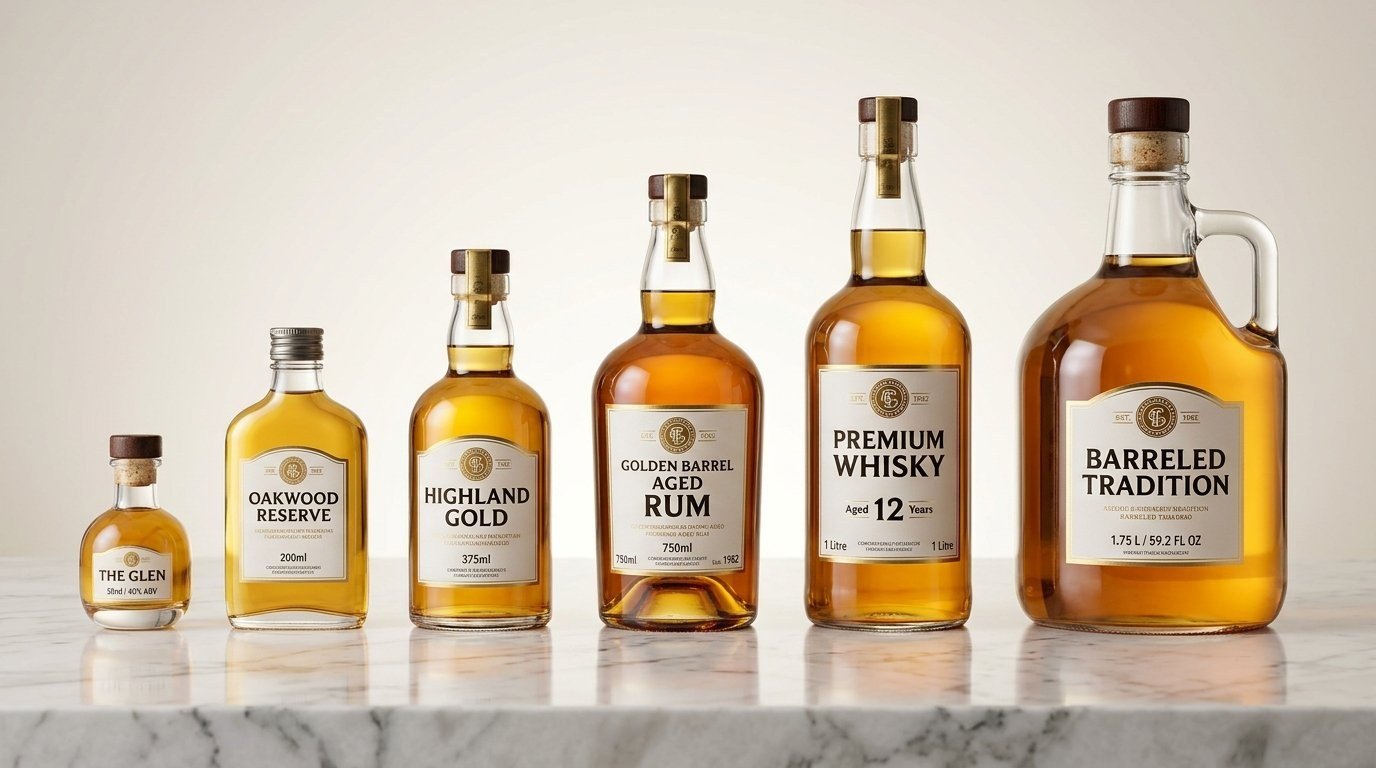 Figure 1: Complete spirits packaging lineup comparing standard commercial bottle capacities from 50ml nips to 1.75L handles.
1. Comprehensive Liquor Bottle Sizes Chart: Engineering & Volume Specifications
In international trade, spirit containers are classified under the metric system governed by both the U.S. Alcohol and Tobacco Tax and Trade Bureau (TTB 27 CFR § 5.203) and European Union directives (Directive 2007/45/EC). The table below outlines standard dimensions, brimful headspace, glass grammage, and palletization engineering metrics used in commercial glass manufacturing:
| Trade Name | Nominal Vol (ml) | Fluid Ounces (fl oz) | Standard Shots (1.5 oz) | Brimful Vol (ml) | Avg Height (mm) | Avg Diameter (mm) | Glass Wt (g) | Standard Finish |
|---|---|---|---|---|---|---|---|---|
| Miniature / Nip | 50 ml | 1.7 fl oz | 1.1 | 56 ml | 105 – 120 mm | 34 – 38 mm | 85 – 110 g | 18-400 / 20-400 ROPP |
| Quarter Pint | 100 ml | 3.4 fl oz | 2.3 | 112 ml | 130 – 145 mm | 45 – 50 mm | 140 – 180 g | 24-400 / 28-400 GPI |
| Half Pint | 200 ml | 6.8 fl oz | 4.5 | 218 ml | 165 – 185 mm | 58 – 65 mm | 240 – 310 g | 28-400 GPI / Ropp |
| Demi / Pint | 375 ml | 12.7 fl oz | 8.5 | 400 ml | 215 – 240 mm | 68 – 74 mm | 380 – 460 g | 18.5mm Bar-top Cork / 28-400 |
| European Standard | 500 ml | 16.9 fl oz | 11.3 | 530 ml | 240 – 265 mm | 72 – 78 mm | 480 – 580 g | 18.5mm / 21.5mm Cork / GPI |
| EU Spirits Standard | 700 ml | 23.7 fl oz | 15.8 | 735 ml | 275 – 310 mm | 76 – 84 mm | 650 – 850 g | 21.5mm Bar-top / Vinolok |
| Standard Fifth | 750 ml | 25.4 fl oz | 16.9 | 780 ml | 280 – 325 mm | 78 – 86 mm | 650 – 950 g | 21.5mm Bar-top Cork / GPI 33-400 |
| One Liter | 1,000 ml | 33.8 fl oz | 22.5 | 1,040 ml | 305 – 340 mm | 86 – 92 mm | 780 – 1,050 g | GPI 33-400 / 30×60 ROPP |
| Handle / Half Gallon | 1,750 ml | 59.2 fl oz | 39.4 | 1,820 ml | 330 – 365 mm | 112 – 125 mm | 1,200 – 1,600 g | 33-400 / Integrated Handle |
2. Nominal vs. Brimful Capacity: The Thermal Expansion Equation
In glass mold machining, the most dangerous assumption a packaging team can make is equating nominal fluid volume with container cavity volume. If you machine a mold to exactly 750ml, the first container that leaves your bottling plant and sits in a shipping container traversing western rail lines during hot weather will pop its cork or rupture along the mold parting seam.
Engineering Principle: Headspace Volumetric Allowance
Distilled spirits (40% to 50% ABV ethanol-water mixtures) have a volumetric thermal expansion coefficient of approximately β = 0.00105 / °C. For an ambient temperature delta (ΔT) of 35°C (from a 15°C filling room to a 50°C summer transit container), fluid expansion is calculated as:
ΔV = V_nominal × β × ΔT = 750 ml × 0.00105 × 35 ≈ 27.56 ml
Consequently, an engineered 750ml glass bottle must provide a minimum brimful capacity of 780 ml (a 30ml headspace buffer) to maintain safe internal air pressure and prevent hydrostatic pressure spikes. Learn more in our dedicated analysis of how many ounces in 750 ml and brimful engineering.
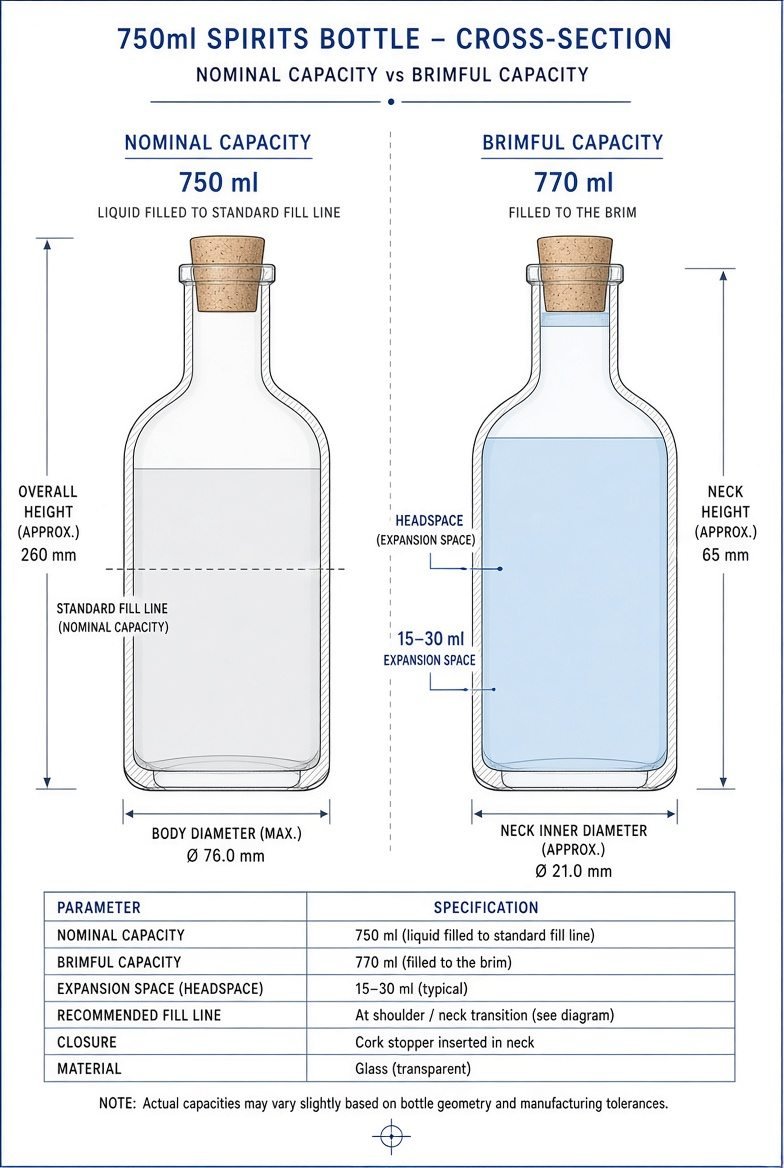 Figure 2: Engineering cross-section highlighting the crucial 30ml headspace allowance required between nominal capacity and brimful volume.
3. Top Five Commercial Liquor Bottle Sizes Explained
The 750 ml Standard Fifth (The Retail Workhorse)
Representing roughly 70% of North American commercial distilled spirits volume, the 750ml Fifth (25.36 fl oz) provides exactly 16.9 standard 1.5 oz shots. For craft distillers targeting premium liquor store shelves, this format pairs best with our extra-flint glass formulations featuring a solid 18mm to 25mm base punt. Discover how top distilleries leverage this geometry in our breakdown of American whiskey brand packaging secrets.
The 700 ml Bottle (The European & Export Standard)
Under EU Regulation 2007/45/EC, 700ml is the mandatory spirits volume across the United Kingdom and Europe. Distilleries planning dual distribution (domestic US and European export) must decide between running two distinct neck mold sets or designing a universal container profile with interchangeable body mold cavities.
The 375 ml Demi / Pint (High-Margin Craft Sampling)
The 375ml bottle holds 12.68 fl oz (8.5 shots). It has surged in popularity for limited-edition cask-strength releases, botanical gins, and travel gift sets. From a glassmaker’s perspective, achieving structural sidewall uniformity (minimum 2.8mm thickness) on smaller diameters requires tight thermal control inside the blow-blow mold cavity.
The 50 ml Nip / Miniature (Impulse & Airline Volume)
Holding 1.69 fl oz, 50ml glass bottles remain a dominant format for hotel minibars, airline service, and checkout counter impulse buys. Because smaller glass containers cool rapidly on mold exit, our annealing lehr temperature gradient is adjusted to eliminate micro-cracking around the narrow 18mm GPI threads.
The 1.75 L Handle (Volume Commercial Distribution)
The 1.75 Liter “Handle” (59.18 fl oz / 39.4 shots) is standard for bar rail spirits and large retail club packs. Due to the high molten gob weight (1,300g to 1,600g of molten glass per bottle), mold parting seams must be engineered with reinforced neck radii to withstand automated pallet clamping.
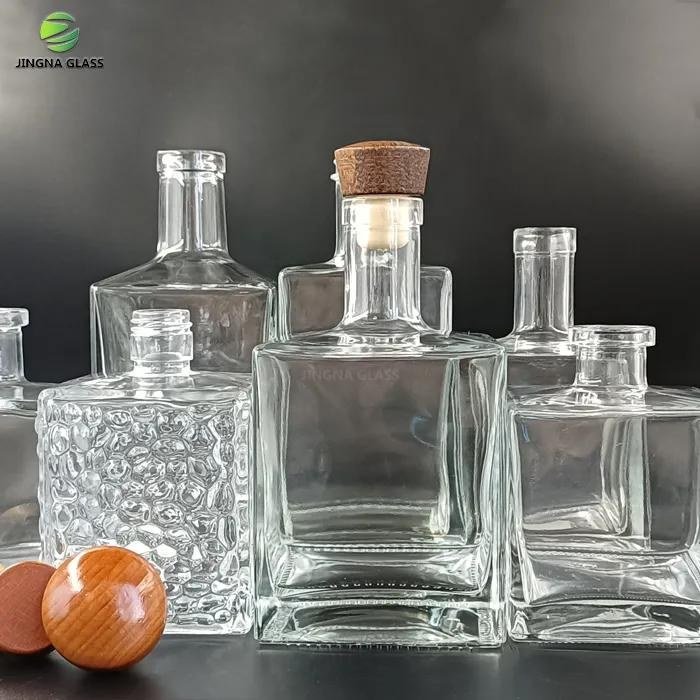 Figure 3: Heavy-base extra flint glass spirits bottles engineered with precision CNC mold tooling for premium craft distilleries.
4. Bottling Line Clearance & Secondary Decoration Considerations
When selecting standard bottle heights and diameters from a supplier’s stock mold catalog, factory engineers must verify:
- Label Billboard Surface Area: Avoid continuous conical tapers if applying roll-fed pressure-sensitive labels (PSL). Cylindrical contact panels or flat flask billboard faces prevent label bubbling and flagging.
- Neck Bore ID Tolerances: For bar-top synthetic or natural cork closures, internal bore diameter must be held to ±0.3mm across the top 20mm of insertion depth. A bore that is 0.4mm oversized will weep alcohol vapor during shipping.
- Surface Finishing & Coatings: Exploring custom textures? Compare thermal screen printing against chemical etching in our operational review of the frosting process for glass bottles.
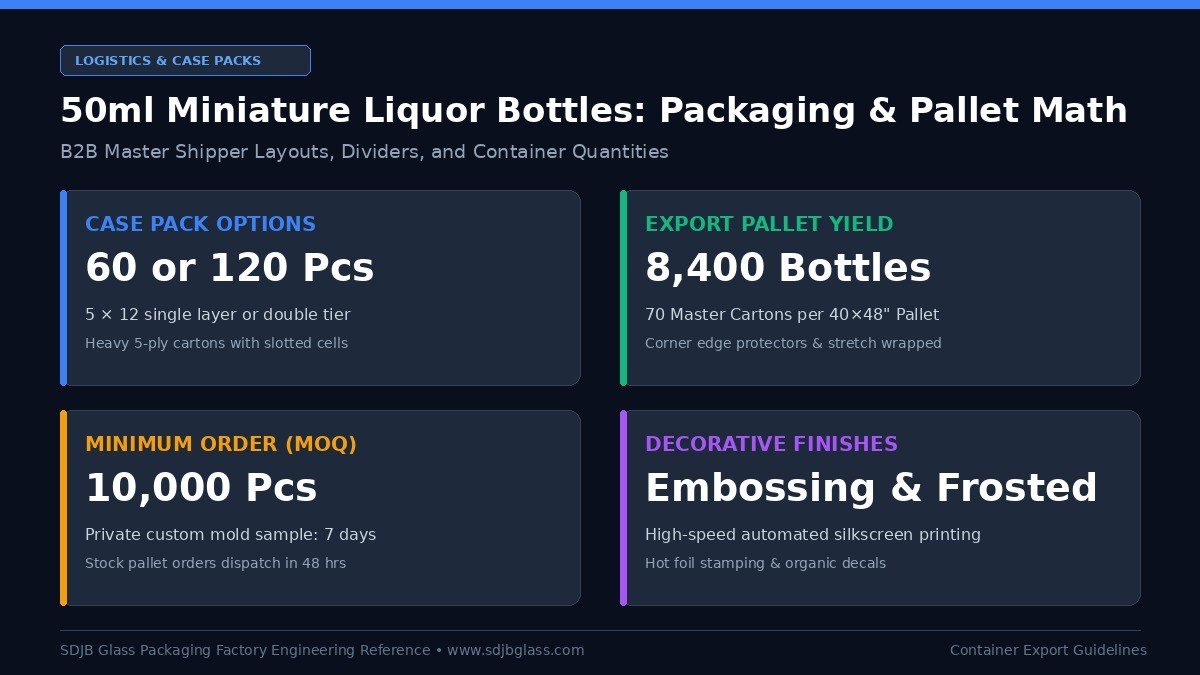 Figure 4: Factory ocean-freight palletization layout showing 5-layer corrugated carton dividers and automated stretch-wrapping.
5. Downloadable 2026 Spirits Bottle Dimensions & GPI Tolerances Spec Sheet (PDF)
Save or share our concise 2-page factory reference chart (covering 50ml–1.75L fill specs, 40HQ pallet quantities, GPI 18.5/19.5/21.5mm bar-top bore tolerances, and ASTM glass QC targets) for your distillery engineering binder:
Download 2026 Bottle Sizes & GPI Spec Chart (PDF) ↓
Publishing a cocktail guide or distillery startup blog? You are welcome to embed or cite our benchmark figures using the HTML attribution below:
<p>Spirits bottle volume, fl. oz conversion & GPI neck specs sourced from <a href="https://www.sdjbglass.com/liquor-bottle-sizes-chart-dimensions-guide/" target="_blank" rel="noopener">Shandong Jingbo Glass 2026 Liquor Bottle Sizes Chart</a>.</p>
Technical Standards & Related Engineering Guides
- Regulatory Standards Referenced: U.S. TTB 27 CFR § 5.203 Standards of Fill · Glass Packaging Institute (GPI) · ASTM C148 Glass Annealing Standards.
- Explore Deeper Bottle Engineering Specs: Heavy Base Liquor Bottles Wholesale · Frosted Glass Liquor Bottles Wholesale · Custom Embossed Glass Bottles · Packaging Standards & Industry Partners.
Frequently Asked Questions on Liquor Bottle Sizes
Engineering a Custom Spirits Bottle for Your Brand?
From custom CNC mold machining and 3D FEA stress simulations to wholesale production runs, Jingbo Glass manufactures super-flint spirit bottles engineered to your exact filling specifications.
Explore Wholesale Moulds & Custom Quotes