

Plant Engineering Brief: Buying frosted glass liquor bottles wholesale comes down to one critical process call on the factory floor: chemical hydrofluoric acid etching versus electrostatic spray frosting. Pick the wrong method and bottle coats peel after 48 hours in chilled bar ice-buckets or arrive with shiny scuff rings after 30 days on an ocean vessel. Here are our exact plant parameters for vodka, gin, tequila, and aged rum distillers.
1. Acid Etching vs. Spray Frosting: Which Surface Survives the Ice Bucket?
Both finishes diffuse light across super-flint glass, yet their chemical bond and unit economics behave completely differently downstream:
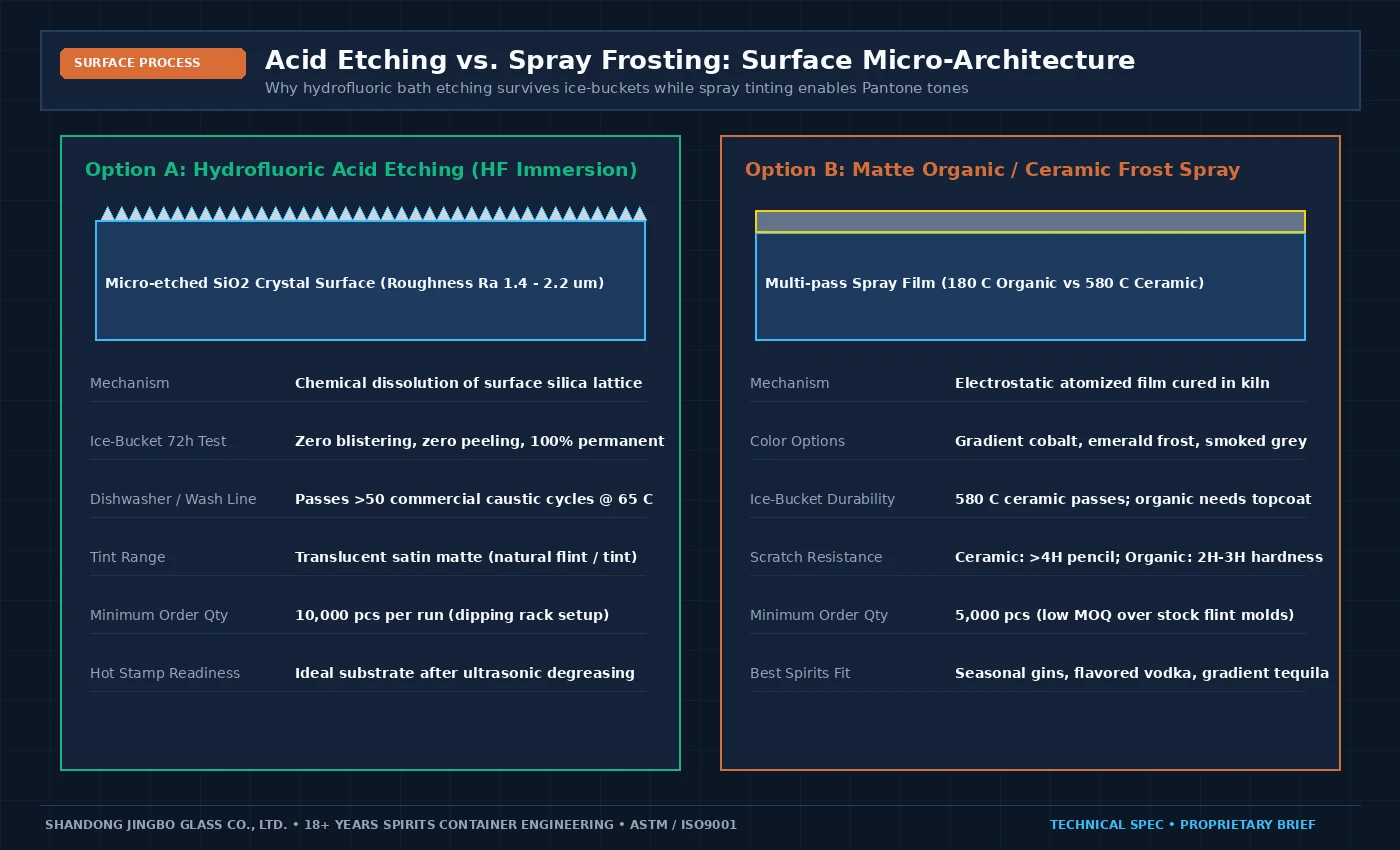
- Hydrofluoric Acid Etching (Permanent SiO2 Etch): Raw bottles pass through controlled HF/ammonium-bifluoride baths that physically micro-etch silica peaks to
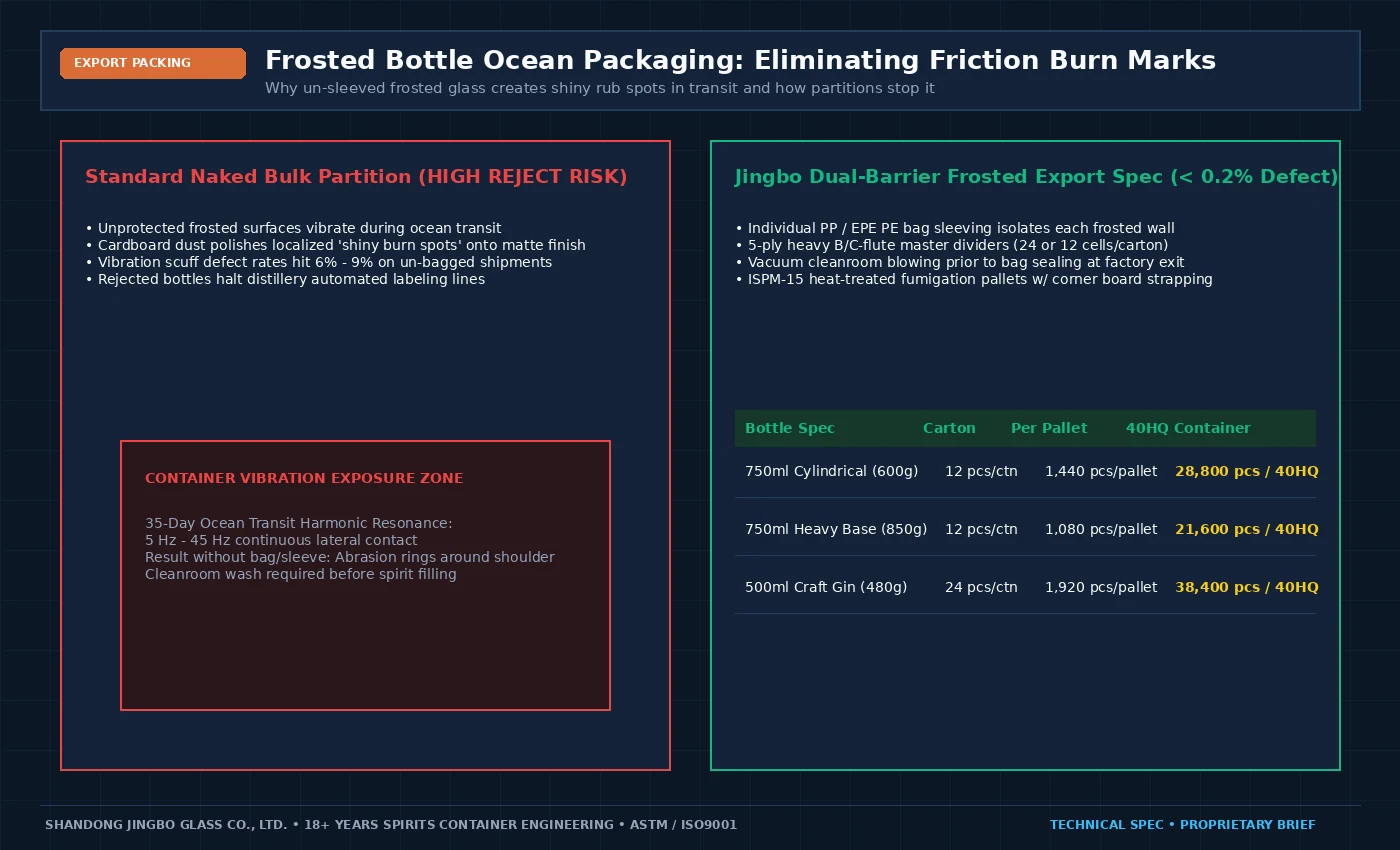
Ra 1.4–2.2 μm. Because no paint film exists, it never blisters in ice water, resists 95% ethanol wipe-downs, and survives >50 commercial 65°C bottle-washer cycles. - Ceramic Spray Frosting (580°C Vitrified Film): Inorganic matte frit fused at high lehr temperatures gives true scratch resistance (>4H pencil hardness) plus custom gradient colors (cobalt blue, emerald mist, smoked charcoal).
- Low-Temp Organic Spray (180°C Cure): Economical for seasonal gin runs at 5,000-piece MOQs, though high-traffic bar service demands a 2K clear PU topcoat to hold up against ice-chest condensation.
2. Production Parameters, MOQ & Cost Breakdown Matrix
Most buyers pair satin frosted finishes with tall cylindrical vodka tooling or squat apothecary gin molds covered in our wholesale vodka bottles engineering guide and gin bottle wholesale specifications.
| Process Route | Curing / Bath Method | Ice-Bucket 72h Pass | Tint Customization | Factory MOQ | Lead Time |
|---|---|---|---|---|---|
| Chemical Acid Etching | Immersion etching bath | 100% Permanent (Zero peel) | Natural translucent white | 10,000 pcs | 25–30 days |
| 580°C Ceramic Frost Spray | Electrostatic gun + kiln fusion | Pass (Fused glass-ceramic) | Smoked, amber, cobalt, sage | 8,000 pcs | 28–32 days |
| 180°C Organic Frost Coating | IR tunnel curing (w/ PU shield) | Pass w/ clear barrier | Full Pantone / gradient | 5,000 pcs | 20–25 days |
3. Silk-Screen, Hot Foil Stamping & Clear Inspection Windows
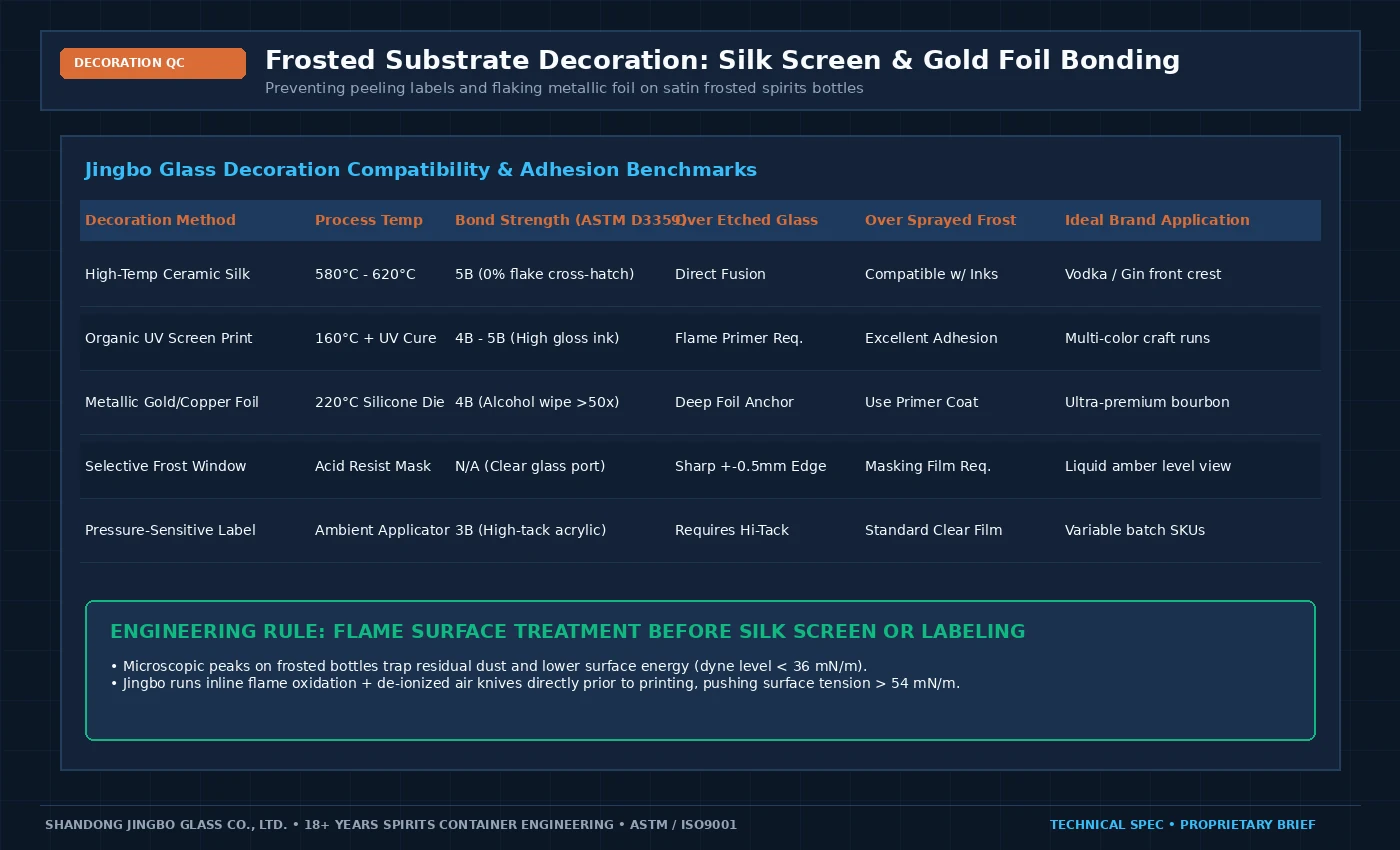
Textured frosted glass traps dust inside microscopic valleys and suppresses surface energy below 36 mN/m, causing labels and cold foil to lift during cold-fill condensation. At Shandong Jingbo Glass, decorated bottles undergo three inline controls:
- Flame Oxidation + Ionized Air Cleaning: Inline gas-flame treatment prior to screen printing pushes surface energy above
54 mN/mso ceramic enamels and metallic inks wet evenly. - Selective Masking Clear Windows: Acid-resistant polymer stencils preserve razor-sharp (±0.5mm) transparent inspection stripes on bottle sides or back panels—letting consumers view spirit clarity or barrel amber depth.
- ASTM D3359 Cross-Hatch Verification: Printed logos and gold hot-stamping pass Class 4B–5B tape-pull checks after 48-hour 40% ABV ethanol exposure. Contrast cleanly against dark UV-blocking lines from our matte black glass bottles coating standard.
4. Ice-Bucket, Rotary Scuff & Individual PE Bag Export Packing
Un-sleeved frosted glass vibrating against cardboard dividers during a 35-day ocean crossing suffers micro-burnishing—creating shiny circular rub spots right around bottle shoulders. Every wholesale frosted order leaves our lehr under strict surface-protection standards:
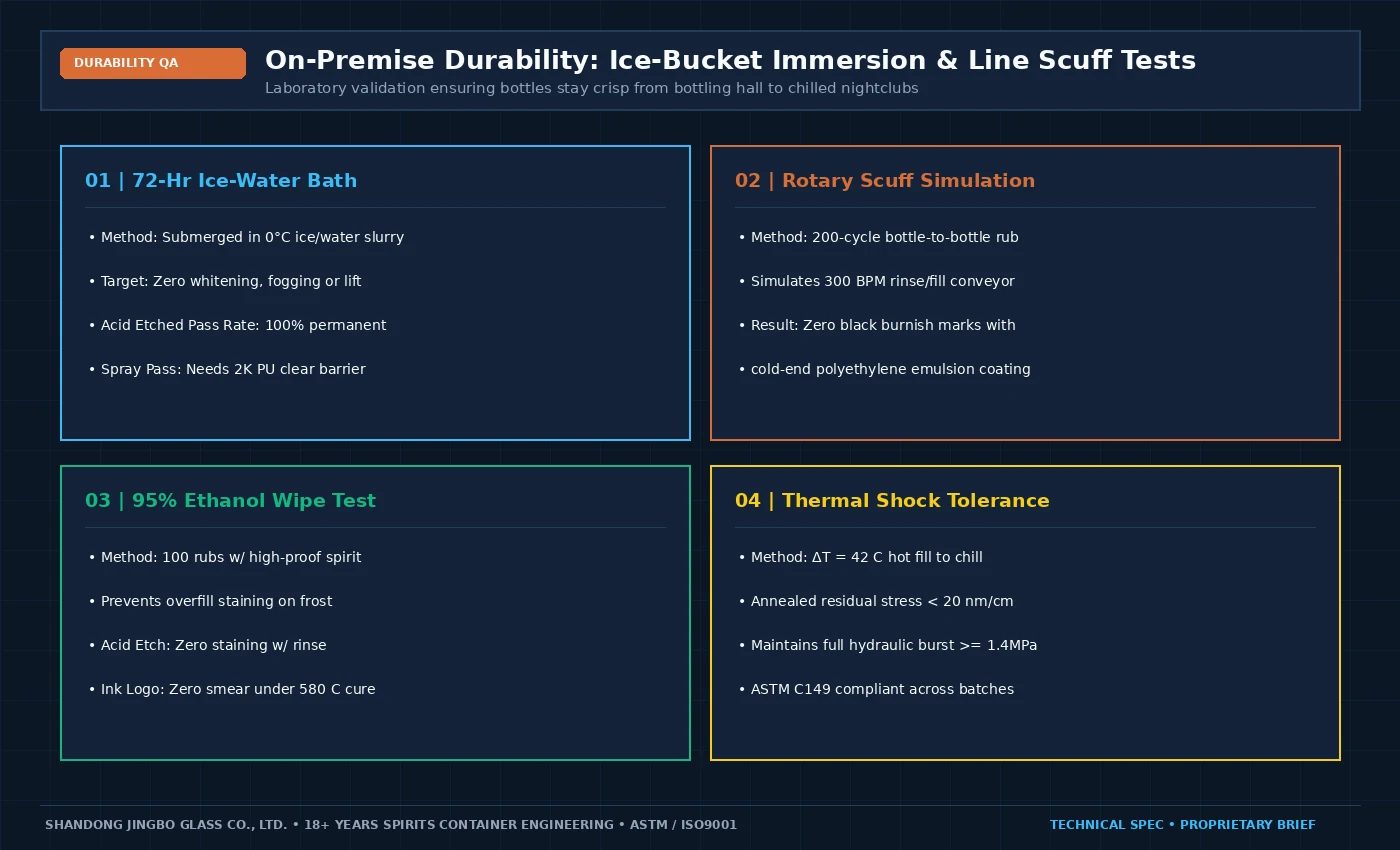
- Individual PE / EPE Film Sleeving: Each bottle slides into an anti-static poly bag before dropping into 5-ply master divider cartons, cutting container scuff rejects from 7% down to under 0.2%.
- Container Yield (750ml Cylindrical, 600g): 12 bottles/carton × 120 cartons = 1,440 pcs/pallet; 28,800 bottles per 40HQ container on ISPM-15 fumigated pallets.
- Direct Closure Compatibility: Engineered to pair seamlessly with calibrated cork bores covered in our bar-top glass liquor bottle closure guide.
5. Frequently Asked Questions (FAQ)
Order Sample Kits: Acid-Etched vs. Custom Gradient Frost
Evaluate adhesion, ice-bucket durability, and clear label windows firsthand. Send your target volume and artwork for 72-hour plant feasibility review.
Request Frosted Bottle Samples & Quote →