

What Is Tempered Glass?
Tempered glass—also called toughened glass—starts as ordinary glass. Manufacturers then apply a controlled thermal treatment that increases its surface strength. The process creates compressive stress on the outer surfaces and tensile stress inside the glass.
As a result, tempered glass becomes significantly stronger than annealed glass of the same thickness. When it breaks, it shatters into small, relatively harmless granular pieces instead of large sharp shards. Therefore, architects, designers and manufacturers often specify tempered glass for safety-critical applications.
How Is Tempered Glass Made?
Thermal tempering follows a clear sequence of steps. Each stage directly affects the final strength and safety performance of the glass.
Step 1: Cutting and Edge Finishing
Workers first cut the glass to the exact final size. They also complete all edge grinding, polishing and any required drilling. After tempering, the glass cannot accept further cutting or drilling—any attempt will cause it to shatter. Therefore, every detail must be finished before the glass enters the furnace.
Step 2: Cleaning
The glass then receives a thorough wash. This step removes dust, oils and residues that could create surface defects during heating.
Step 3: Heating
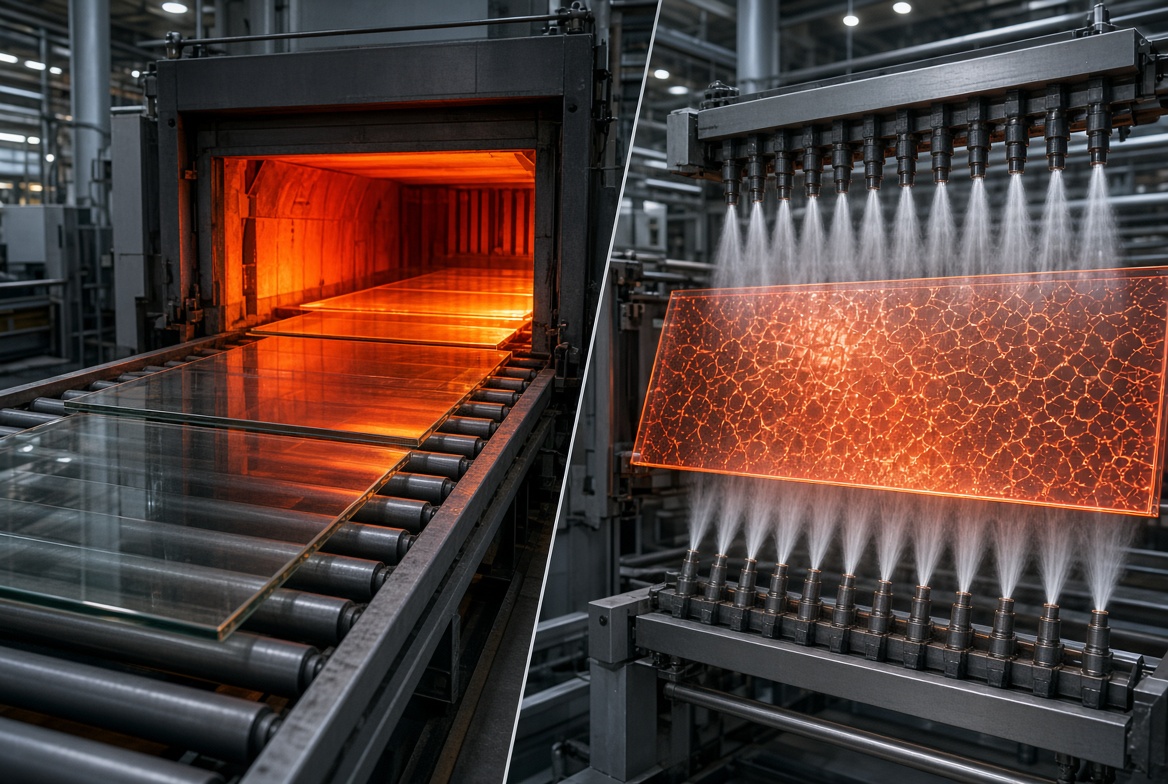
Next, the glass enters a tempering furnace. The furnace heats it uniformly to approximately 620–650°C, near the softening point of the glass.
Step 4: Rapid Cooling (Quenching)
Immediately after heating, high-pressure air jets cool both surfaces much faster than the interior. The outer layers solidify first while the core remains expanded. As the core finally cools and contracts, it locks in permanent compressive stress on the surface. This stress pattern gives tempered glass its higher mechanical strength.
Step 5: Inspection
Finally, inspectors check each batch for surface stress, optical quality and compliance with safety standards. Small variations in heating or cooling can later appear as strength differences or spontaneous breakage risk.
In addition, chemical strengthening offers another route, especially for thinner glass. However, it follows a completely different principle and produces different performance characteristics.
Applications of Tempered Glass
Because of its higher mechanical strength and safer breakage pattern, tempered glass appears across many industries.
Architectural and Interior
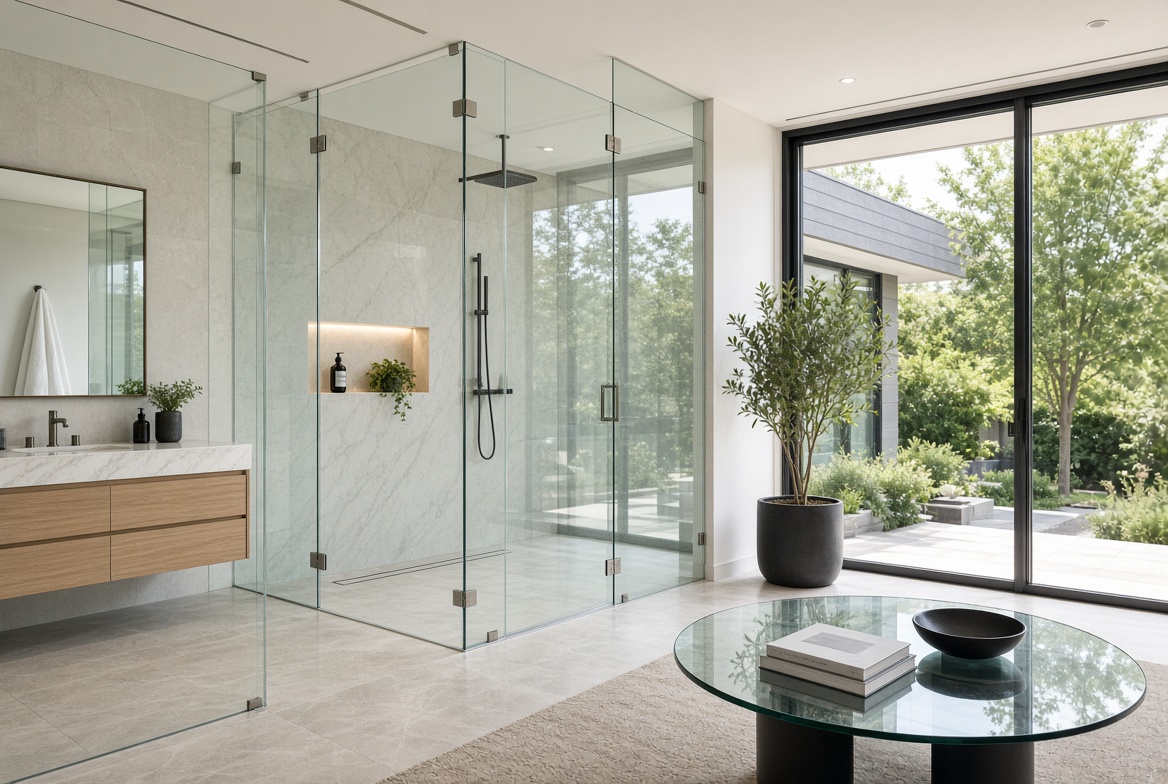
Shower doors, glass partitions, curtain walls, balcony railings and glass tabletops all rely on tempered glass. In these settings the granular break pattern significantly reduces the risk of injury.
Automotive
Side and rear windows in vehicles typically use tempered glass. While windshields use laminated glass, side windows rely on tempering so they break into small granules upon impact and reduce laceration risk.
Consumer Electronics
Smartphone screens, tablet covers and certain appliance panels often use chemically tempered glass. This treatment improves scratch and drop resistance for everyday devices.
Kitchen and Appliances
Oven doors, stovetop panels and some glass cookware lids use tempered glass. The material withstands daily temperature cycles and accidental impacts better than ordinary annealed glass.
Tempered Glass vs. Borosilicate Glass
Many people compare these two materials as if they were direct competitors. However, they describe different things. One refers to a strengthening treatment; the other refers to glass composition.
| Property | Tempered Glass | Borosilicate Glass |
|---|---|---|
| Primary Strength | Impact & surface strength | Thermal shock & chemical resistance |
| Failure Mode | Small granules | May crack; less prone to shattering from heat |
| Thermal Shock Resistance | Moderate (can still break from rapid temperature change) | Excellent (can handle ΔT of 170°C or more) |
| Chemical Durability | Depends on the base glass | Generally high (good acid/alkali resistance) |
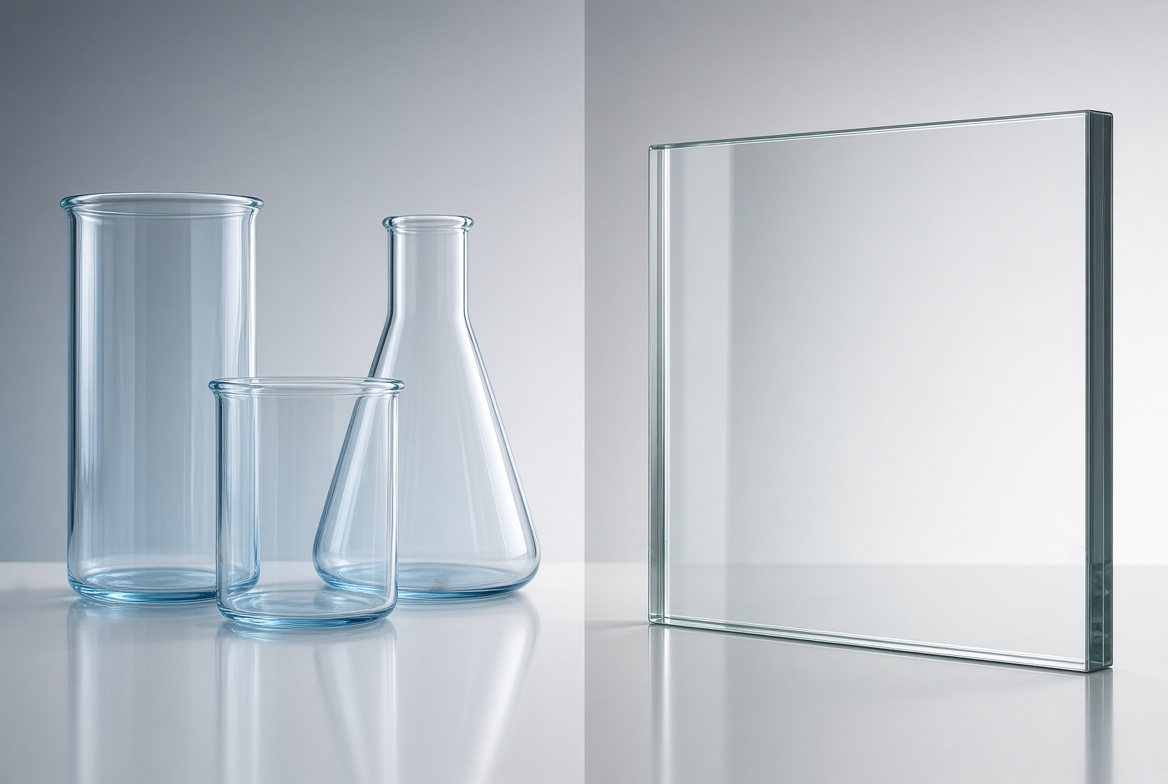
| Typical Uses | Shower doors, phone screens, auto glass, furniture | Labware, pharmaceutical vials, heat-resistant cookware |
| Can Be Cut After Processing? | No (will shatter) | Yes (before final annealing) |
For packaging buyers the distinction matters. If your priority is a premium spirits bottle with a heavy base and embossing, standard soda-lime or borosilicate glass may be the better choice depending on filling temperature. In contrast, if you need safety glazing for a retail display, tempered glass is the clear answer. Our team can help you evaluate these trade-offs during the planning stage.
Custom Glass Packaging Considerations
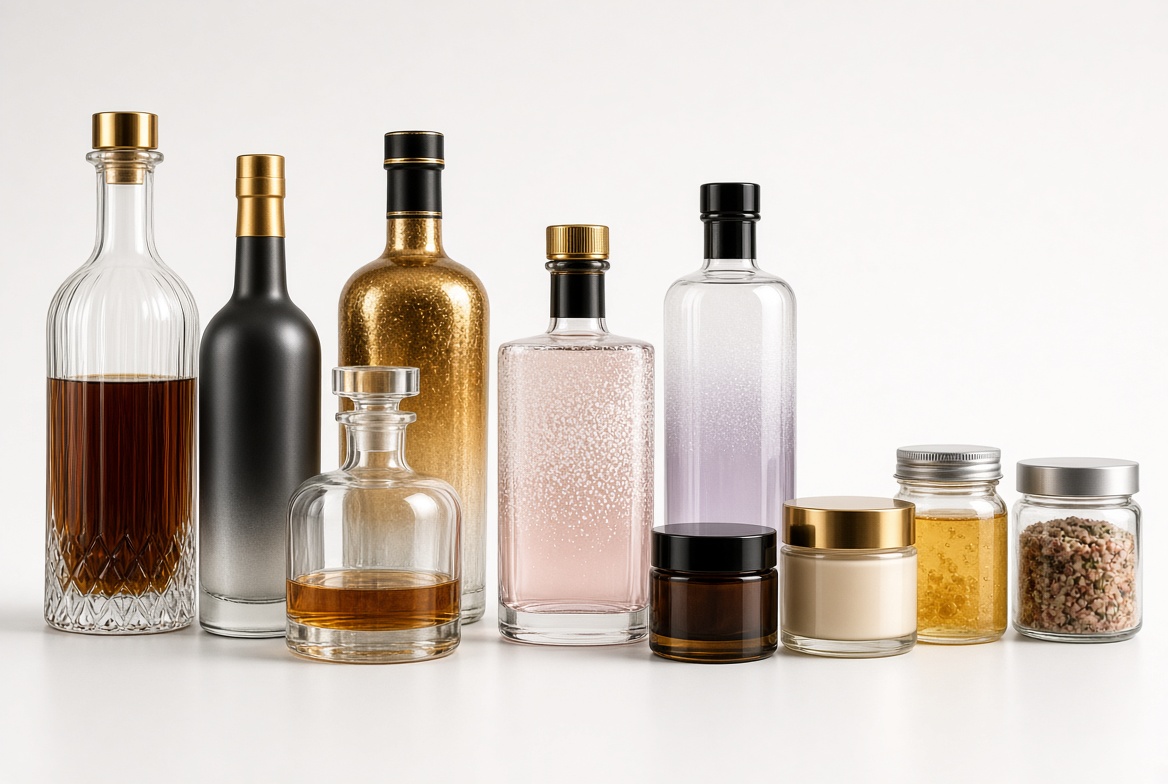
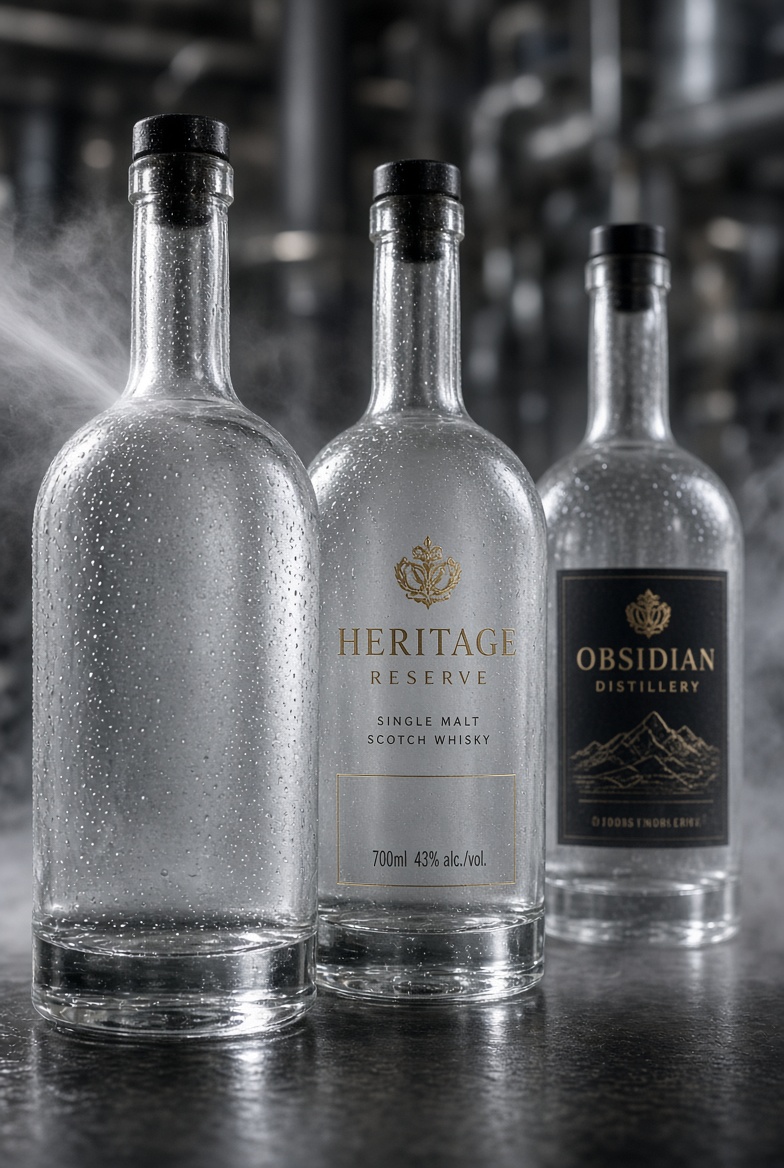
Beyond material selection, the physical design of your bottle shapes brand perception. Whether you choose borosilicate, tempered or standard soda-lime glass, custom mould development allows you to create distinctive silhouettes, embossed logos and unique closure systems.
From Design to Production
The process moves from concept sketch to production mould through several clear stages: design confirmation, mould fabrication, sample production and mass manufacturing. At each stage, quality inspection verifies consistency across the entire order.
Practical Material Advice for Packaging
For the majority of beverage and liquor bottles, conventional soda-lime glass remains the practical workhorse. It offers good appearance, adequate strength when properly designed, compatibility with standard filling lines and competitive cost at volume.
In contrast, borosilicate becomes interesting when the filling process involves significant thermal shock or when higher chemical durability is specifically required. Tempered glass rarely works as a direct substitute for packaging containers—the process constraints and cost structure do not fit bottle production the same way they fit flat architectural glass.
Conclusion
Tempered glass is the specialist’s choice for impact safety—it protects people when breakage occurs. Borosilicate glass is the specialist’s choice for heat and chemicals—it helps prevent breakage from thermal shock in the first place.
Understanding how tempered glass is made helps you appreciate why it cannot be cut after processing and why it performs the way it does. For beverage brands and packaging professionals, the key is matching material properties to real-world conditions rather than relying on marketing labels.
Need help specifying the right glass for your next project? Visit our product range or contact us to discuss capacity, shape, thermal requirements and production constraints. Clear requirements early in the process almost always save time and cost later.
Frequently Asked Questions
No. The tempering process creates internal stress that makes the glass unstable if cut or drilled afterward. Any attempt to cut tempered glass will cause it to shatter into small granular pieces. Therefore, all cutting and edge finishing must be completed before the glass enters the tempering furnace.
It depends on the type of stress. Tempered glass has superior impact and surface strength—it resists drops and blows better. In contrast, borosilicate glass has superior thermal-shock resistance and chemical durability. They are engineered for different failure modes.
The rapid quenching process creates a layer of compressive stress on the surface and tensile stress inside. When the glass breaks, this stored energy causes it to fracture into thousands of small, relatively harmless granular pieces rather than large knife-like shards.
Tempered glass handles moderate temperature changes better than standard annealed glass. However, it is not engineered for extreme thermal shock like borosilicate glass. Pouring boiling water directly onto cold tempered glass can still cause it to crack or shatter, depending on thickness and edge condition.
Heat-strengthened glass undergoes a similar heating process but cools more slowly than fully tempered glass. As a result, it achieves about twice the strength of annealed glass (compared with 4–5 times for fully tempered) and breaks into larger shards rather than granules. Manufacturers use it where some added strength is needed but the safety break pattern of tempered glass is not required.
Most beverage bottles (spirits, wine, beer, food jars) are made from standard soda-lime glass or, in special cases, borosilicate glass—not tempered glass. The tempering process is not practical for narrow-neck bottles and is unnecessary for most beverage packaging. Therefore, tempered glass is reserved primarily for flat glass applications such as doors, screens and architectural glazing.