

Believe it or not, glass is everywhere — from the everyday beverage bottles in your kitchen to the laboratory equipment in research facilities and the heat-resistant cookware on store shelves. Yet not all glass performs the same way. Differences in composition and manufacturing processes directly affect how a glass product behaves under high temperatures, physical impact, and contact with various substances.
When it comes to choosing glass for a specific application, industry professionals often compare borosilicate glass and tempered glass. Both offer distinct advantages, but each is engineered to solve a different problem.
Understanding these differences helps manufacturers, product developers, and packaging buyers make smarter decisions. In this article, we’ll walk you through what borosilicate glass is, how it’s made, where it’s used, and how it compares to tempered glass.
How Many Ounces Are in 750 Milliliters?
A 750 ml bottle holds approximately 25.36 US fluid ounces (fl oz).
Here is a quick reference for conversions:
- 750 ml = 25.36 US fluid ounces
- 750 ml ≈ 25.4 US fluid ounces (rounded to one decimal place)
- 750 ml ≈ 25 ounces (a rough estimate based on 30 ml per ounce)
Knowing the precise conversion is useful when working with product specifications, packaging information, and international volume measurements.
For everyday purposes, you can simply remember that a 750 ml bottle holds slightly more than 25 US fluid ounces.
How to Convert 750 Milliliters to Ounces
Converting milliliters to US fluid ounces is straightforward once you know the conversion factor:
1 US fluid ounce = 29.5735 milliliters
To convert milliliters to fluid ounces, divide the milliliter value by 29.5735:
US fluid ounces = milliliters ÷ 29.5735
Taking a 750 ml bottle as an example:
750 ÷ 29.5735 = 25.36 US fluid ounces
For the reverse conversion, multiply the value in US fluid ounces by 29.5735:
- 10 fluid ounces × 29.5735 = 295.74 milliliters
- 16 fluid ounces × 29.5735 = 473.18 milliliters
- 25 fluid ounces × 29.5735 = 739.34 milliliters
For quick estimates, 1 US fluid ounce is often approximated as 30 milliliters. Keep in mind, however, that this is a rounded figure and not an exact conversion.
US Fluid Ounces vs. UK (Imperial) Fluid Ounces
When performing conversions, always confirm which “fluid ounce” you are working with. The measurement standards differ between the United States and the United Kingdom:
- 1 US fluid ounce ≈ 29.5735 milliliters
- 1 UK (Imperial) fluid ounce ≈ 28.4131 milliliters
Therefore, 750 milliliters equals approximately 25.36 US fluid ounces, or 26.40 UK (Imperial) fluid ounces. If you are specifying packaging for the U.S. market, be sure to use “U.S. fluid ounces” rather than Imperial.
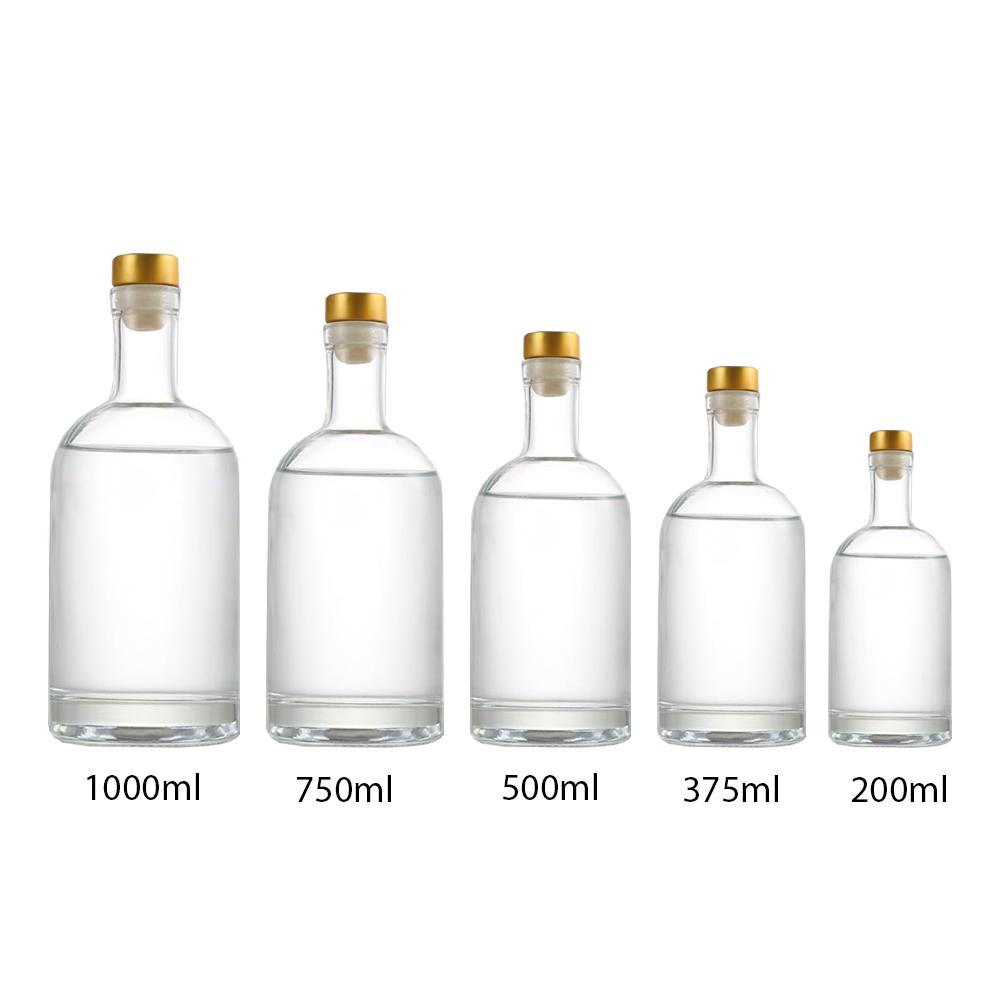
Common Glass Bottle Capacities (ml vs. oz)
While 750 ml is a standard size for wine and spirits, glass bottles are available in a wide range of capacities. The right choice depends on the product, sales channel, target market, and packaging requirements.
| Bottle Capacity | U.S. Fluid Ounces |
|---|---|
| 50 ml | 1.69 fl oz |
| 100 ml | 3.38 fl oz |
| 200 ml | 6.76 fl oz |
| 375 ml | 12.68 fl oz |
| 500 ml | 16.91 fl oz |
| 700 ml | 23.67 fl oz |
| 750 ml | 25.36 fl oz |
| 1000 ml (1 L) | 33.81 fl oz |
| 1500 ml (1.5 L) | 50.72 fl oz |
| 1750 ml (1.75 L) | 59.17 fl oz |
The conversions above are based on U.S. fluid ounces. For glass bottle manufacturers, wholesalers, and beverage brands, a clear understanding of these capacity specifications makes it easier to compare product parameters and plan packaging strategies across different markets.
Why Is 750 ml the Standard for Alcoholic Beverages?
The 750ml bottle is one of the most recognizable formats in the wine and spirits industry. In the United States, this size is often referred to as a “fifth” — a traditional term rooted in its historical capacity. Today, 750ml has become the standard retail size for a wide range of alcoholic beverages, including whiskey, vodka, gin, rum, tequila, and wine.
Brands continue to use this capacity for several reasons:
1. A Practical Size for Retail
The 750ml volume strikes an ideal balance — convenient for individual retail purchases, restaurant and bar service, and everyday home consumption. It meets retail demands without being as heavy or cumbersome as larger-format bottles.
2. Versatility Across Spirits
The same capacity works for a diverse range of alcoholic beverages, including:
- Whiskey bottles
- Vodka bottles
- Gin bottles
- Rum bottles
- Tequila bottles
- Brandy bottles
- Wine bottles
While the capacity stays the same, the bottles themselves can vary significantly in shape, color, closure design, and decorative detailing — allowing each brand to build a distinct identity.
3. Flexibility in Packaging and Branding
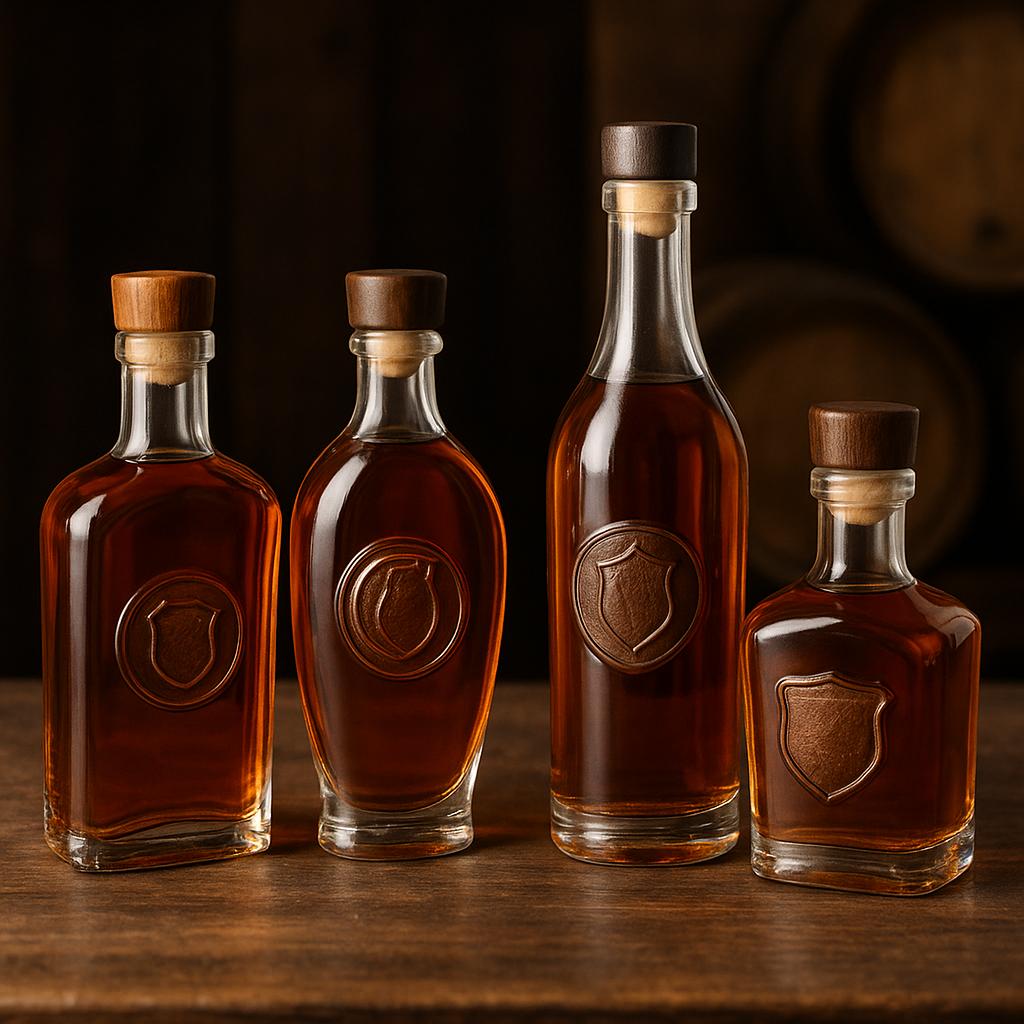
A 750ml bottle offers ample space for unique packaging design. Some brands favor a traditional round silhouette, while others choose square shapes, heavy bases, elongated necks, embossed details, or custom-molded glass. The bottle itself is a vital element in how consumers identify and remember a brand.
Selecting the Right 750ml Glass Bottle for Your Brand
Bottle capacity is just one factor in the packaging decision. For beverage brands and packaging procurement professionals, aesthetics, functionality, manufacturing requirements, and cost are equally important.
- Glass material: Soda-lime is economical for most spirits; borosilicate suits hot-fill or lab-grade needs.
- Closure system: Cork, screw cap, or tamper-evident seal — each affects shelf life and user experience.
- Decoration: Embossing, screen printing, labeling, and color coating all shape brand perception.
- MOQ and lead time: Custom molds require higher minimums but deliver stronger differentiation.
- Quality control: Every batch should pass our quality inspection process before shipment.
Our bottle design team can help you evaluate these factors during the planning stage. For a deeper look at how bottles are produced, see our Technical Guide to Glass Bottle Production.
Frequently Asked Questions
No. 750 ml equals 25.36 US fluid ounces. The “25 oz” figure is a rounded estimate. If you need an exact specification for labeling or packaging, use 25.36 fl oz.
A standard liquor bottle in the U.S. is 750 ml, or 25.36 US fluid ounces. This applies to whiskey, vodka, gin, rum, and tequila.
A US fluid ounce is about 29.57 ml, while a UK (Imperial) fluid ounce is about 28.41 ml. That makes 750 ml equal to 25.36 US fl oz but 26.40 UK fl oz — an important distinction for international labeling.
Historically, liquor in the U.S. was sold in bottles holding one-fifth of a gallon (about 757 ml). When metric sizes were standardized, 750 ml became the modern equivalent and the name “fifth” stuck.
Yes. Custom molds, embossing, colors, and decoration are all available. Our custom design team works with brands from concept through production. Contact us to discuss your requirements.